Not everything is as it seems. This is certainly the case with Ficaria verna, a flowering plant that may appear to be an unassuming perennial but is actually an invasive weed.
Typically referred to as lesser celandine, but also called fig buttercup and pilewort, this invasive species was brought over to North America at some point (the earliest known U.S. specimen was collected in 1867) and is now notorious for competing with and killing native plants and seedlings. It spreads quickly, so time is of the essence for lawn care operators (LCOs) looking to prevent it from harming flowerbeds and lawns.
What Fig Buttercup Looks Like
If you believe you may be dealing with fig buttercup plants, it’s important to check them and verify—you want to be sure you aren’t killing a native plant. There are a few ways to tell if you’re dealing with fig buttercup.
Flowers and Petals
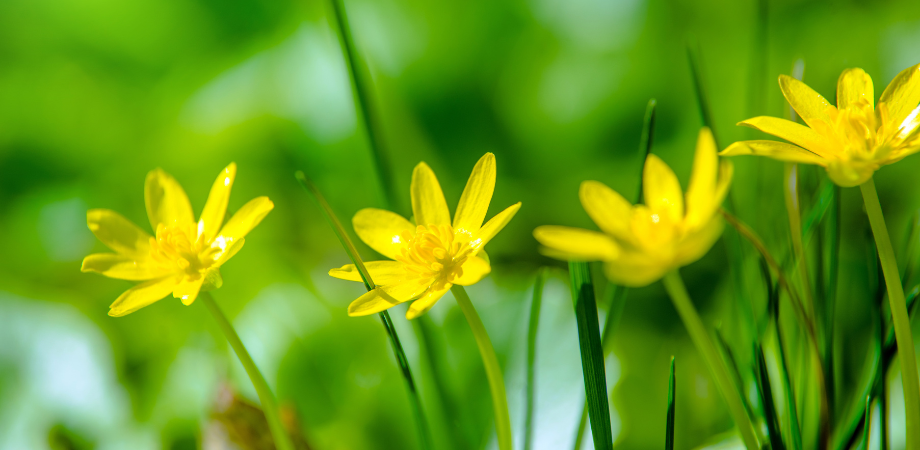
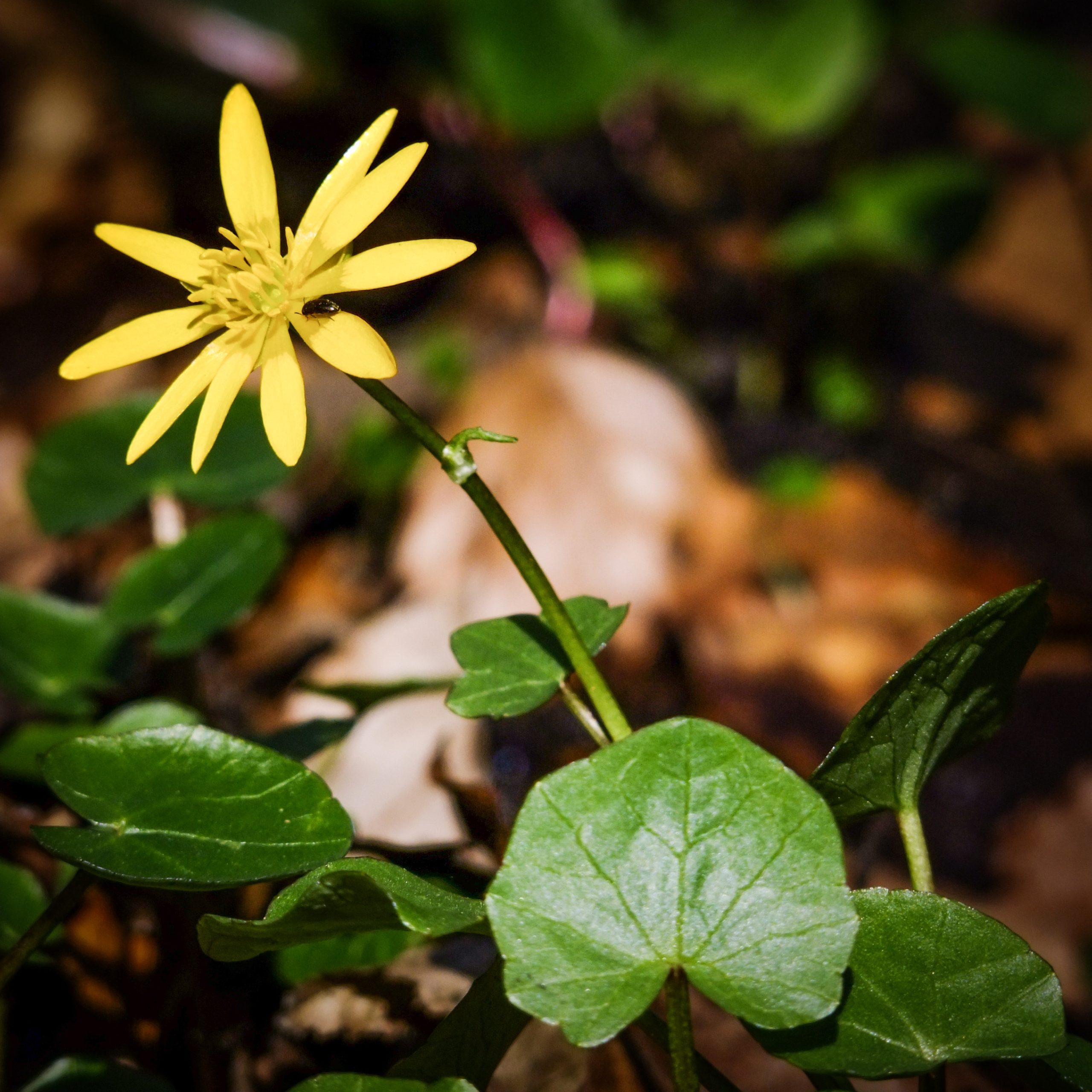
The first thing LCOs will notice is the plant’s flowers—and fortunately, its tell-tale petals will give it away. At first glance, fig buttercup may be mistaken for marsh marigold, Celandine poppy, and similar plants with yellow flowers. It’s masquerading. Unlike other similar-looking plants, fig buttercup flowers have many petals—usually between eight and 12. These flowers will bloom in early to mid-spring.
The plant is also not a true buttercup. Buttercup plant flowers normally curl up into a cup-shaped form, but fig buttercup flowers do not. If the fully bloomed flowers have eight or more petals, do not resemble cups, and are on the same stalk, it is likely a fig buttercup plant.
Height and Leaves
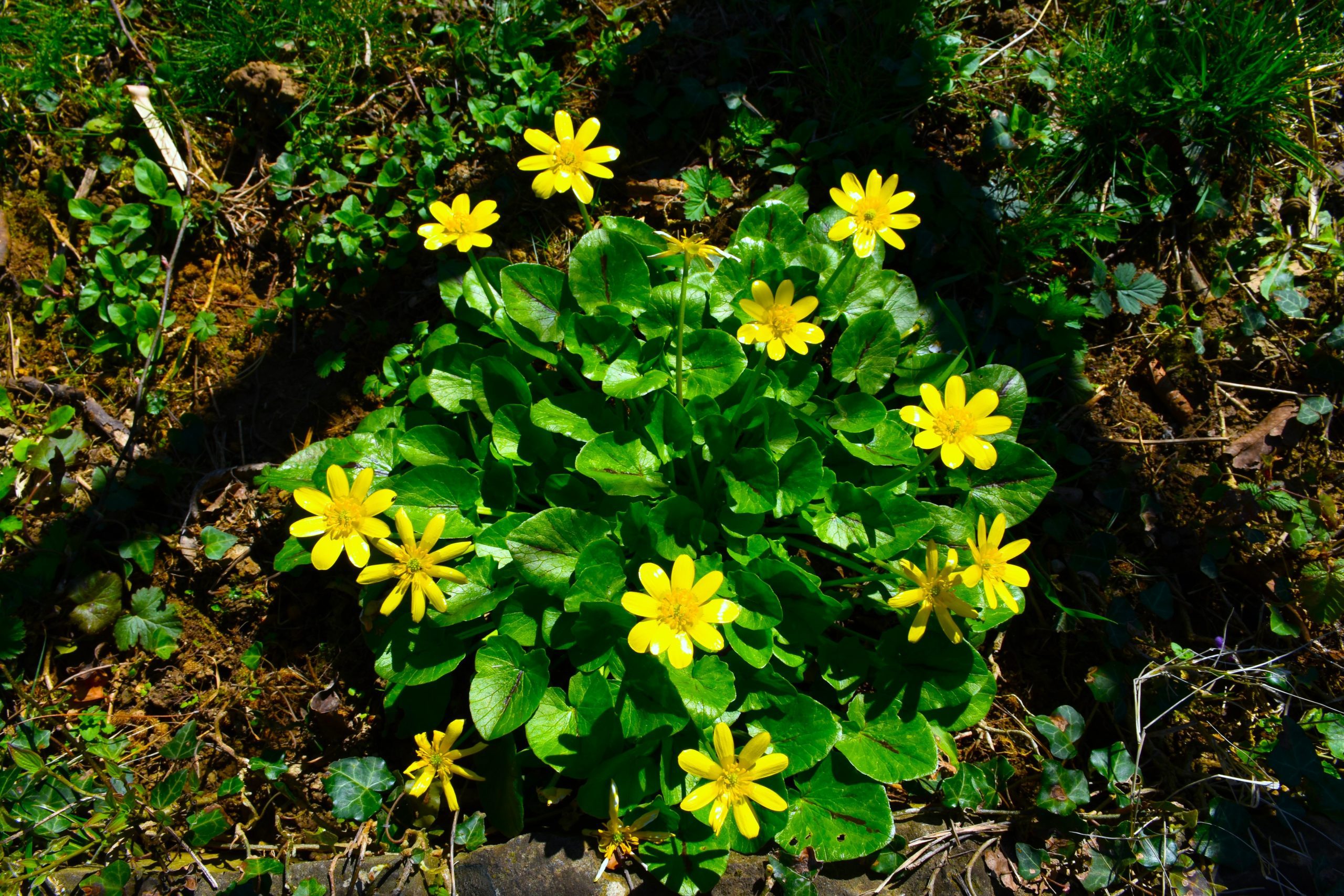
Fig buttercup is also not a tall plant. It will be under six inches in height, whether it’s alone or part of a mat. It can be further identified by its heart-shaped, lilypad-esque leaves, which are dark green and usually less than two inches long. The leaves may have small reddish streaks and can be a lighter green in some cases. While the top of the leaf is glossy, the underside is almost lizard-like in appearance, similar to other weeds.
Other Characteristics
Once flowering is over, small whitish bulblets will appear under the leaves, and tubers will appear near the roots (more on why that’s important in the next section).
When Fig Buttercup Appears
The plant appears early in the year—typically February and March—and dies by June. While it may not be around for long, it can continue to be detrimental to native plants even after flowering.
Here’s why: Once flowering is over, those small whitish bulblets will appear under the leaves and tubers will appear, as we mentioned. It’s important to be careful when removing plants in this stage, as tubers will appear underground near the roots, too. When the bulblets are disturbed, they will drop seeds, and when the tubers are disturbed and separated from the plant, they will create new plants that will pop up next year.
How to Control Fig Buttercup
Getting rid of the plant can be difficult. If LCOs are not dealing with a large infestation scenario, digging out individual plants is an option. Since the plant reproduces via the underground tubers, those must be dug up as well. This is also the only viable control option after active growing ceases.
Chemical treatments with glyphosate can be effective when the plant is actively growing, usually beginning in February and continuing through April. It’s important to note that glyphosate is a non-selective herbicide and will kill all foliage in the treated area. Glyphosate products that control buttercup plants include Roundup QuikPro SC and Roundup Promax.
Herbicides containing triclopyr are effective, too, and can be used on turf. A surfactant can enhance the effects of triclopyr products, so be sure to select a surfactant compatible with your customers’ turf type to avoid damage. Triclopyr products that control buttercup plants include 4-Runner, Crossroad Herbicide, and 4-Speed XT.
For more information on fig buttercup and other weeds, including how to control them, reach out to your ATS rep. Need a rep? Find one here in seconds.