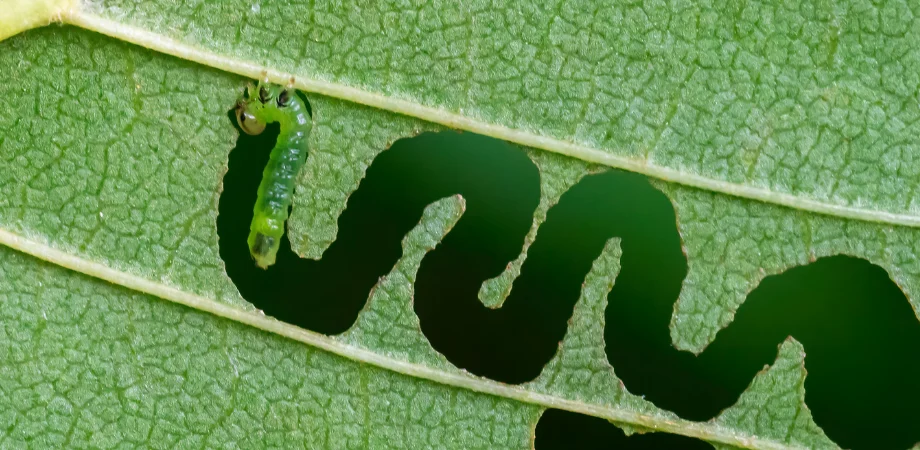
The elm zigzag sawfly is an invasive insect that defoliates elm trees. This species is an emerging threat in the Midwestern and Northeastern United States, so it’s important to get up to speed if you’re in those regions.
When Did They Get Here?
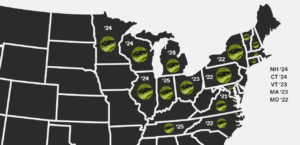
The elm zigzag sawfly hails from eastern Asia, but it managed to make its way to Quebec in 2020. Since then, it’s spread to quite a few Canadian provinces and U.S. states. The map below shows which U.S. states it’s been spotted in, along with the year it was first confirmed to be present.
What Do They Do?
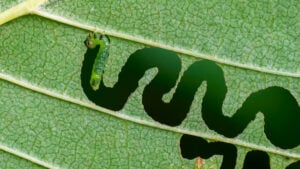
Elm zigzag sawflies (commonly abbreviated as EZS) are defoliating insects that feed only on elms. Their larvae feed on an elm’s leaves in a ‘zigzag’ pattern, hence the name. They can affect all of the different elm species present in the U.S.
Once they reach adult form, they only feed on pollen and nectar. They then lay their eggs on elm leaves to start the cycle again.
What Do They Look Like?
Elm zigzag sawfly eggs are extremely small and appear on the edges of an elm’s leaves. Larvae typically hatch within a week.
EZS larvae are green and can grow up to 11 millimeters long by 1.5 millimeters wide, according to Canada’s Invasive Species Centre. The larvae take about two weeks to go through the insect’s six instars.
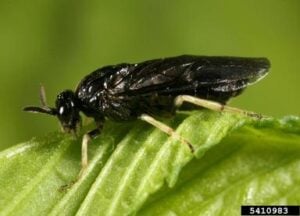
Adults range from 6 to 7 millimeters long, are black in color, and have brown wings.
Why Is It Important to Watch Out for Them?
The elm zigzag sawfly has spread rapidly over the past several years, thanks to its asexual reproduction cycle, ability to travel long distances, and ability to lay up to 49 eggs. While the threat the EZS poses is limited to an elm’s leaves, consistent defoliation can make the tree more vulnerable to diseases and pests over time.
How Should They Be Managed?
Unfortunately, since it’s relatively new to North America, there aren’t many insecticides that are specifically labeled for the EZS. That being said, doing a soil drench with dinotefuran or imidacloprid-based products will likely be successful, since many of those products are labeled for other types of sawflies. Spray applications with pyrethroids and other insecticides labeled for sawflies will probably do the trick, too.
Be sure to monitor elms for symptoms, primarily the telltale zigzag feeding pattern on their leaves. If you see evidence of EZS damage or a specimen in any stage of its lifecycle, you should report it immediately to your state’s department of natural resources.
Your ATS rep can help you find products that will help you manage this and other insects on your customers’ trees.