
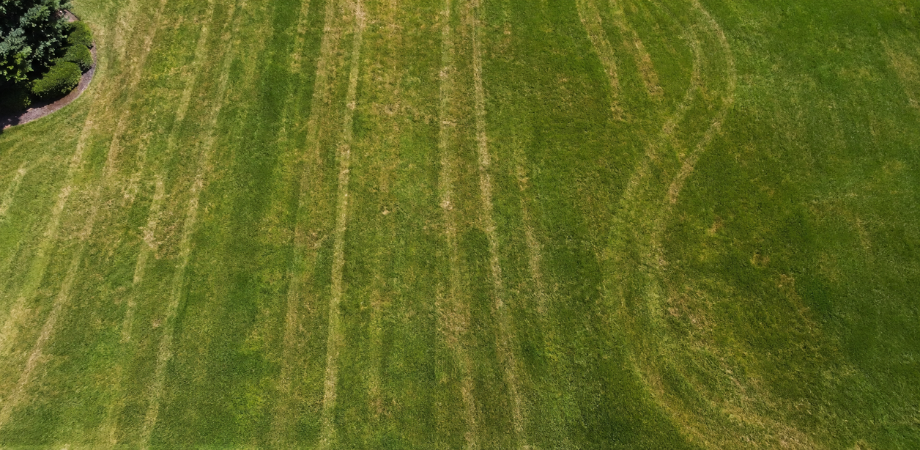
If your customers have noticed brown tire tracks or traffic patterns on their lawns after you’ve mowed or fertilized, they’re likely seeing a condition known as heat tracking.
Heat tracking occurs when equipment or foot traffic passes over turf that is already struggling from high temperatures and a lack of moisture. As the soil dries, the turf begins to lose its ability to cool itself through evapotranspiration, which is the turf’s natural way of releasing water to regulate temperature.
Once the turf reaches its wilting point, even normal traffic from mower or spreader/sprayer tires or repeated foot traffic can bruise the grass and leave visible brown tracks. Because the damage often follows the exact path of equipment tires, it’s sometimes mistaken for fertilizer burn or herbicide contamination. If customers ask about it, you can explain that the discoloration is caused by mechanical stress on turf that is already under pressure.
How to Prevent Heat Tracking
It’s not always easy to do, but the best approach is to reduce unnecessary traffic during the hottest part of the day, when the turf is under the greatest amount of stress. However, the timing varies from lawn to lawn depending on soil moisture, turf type, sun exposure, and weather conditions. A lawn that appears healthy in the morning may become much more vulnerable by late afternoon.
Heat Tracking Is Temporary
The good news is that heat tracking is usually a temporary cosmetic issue. Once temperatures cool and the lawn receives adequate irrigation or rainfall, healthy turf typically recovers.
During extended periods of summer heat, maintaining proper soil moisture and limiting traffic across stressed areas can go a long way toward protecting the health and appearance of your customers’ lawns.
For additional tips and helpful information, reach out to your ATS rep. Don’t have a rep? Find one here in seconds.


