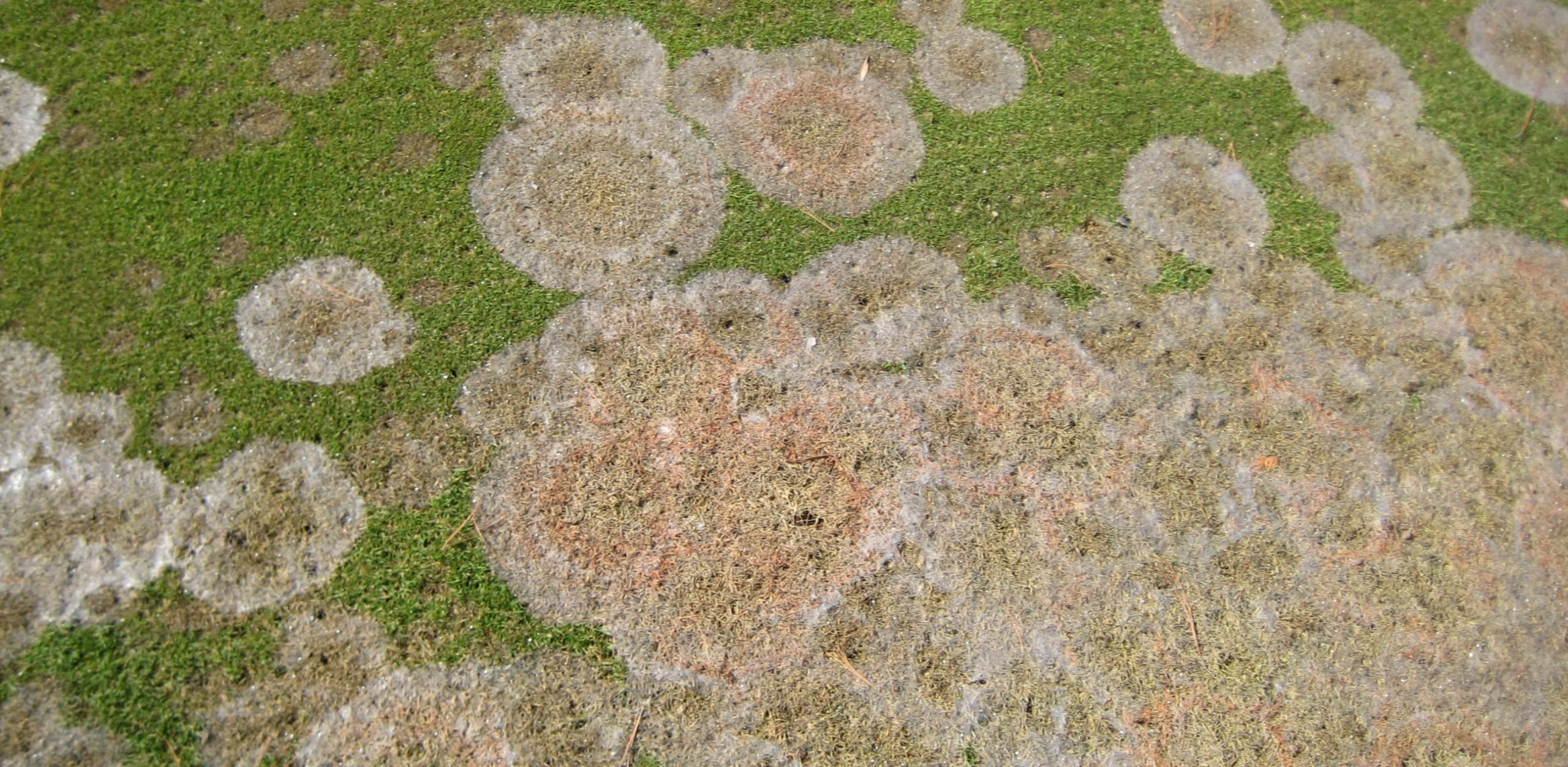
Winter is quite a ways away, but now’s a good time to talk about snow mold applications.
Timing Your Application
A preventative application is always better than a curative one. I’m a big fan of getting your application down a bit early, too. Applying a little early is the safest approach, because once the window closes, it’s too late. I’ve seen instances where superintendents wait a bit longer than they should, and then an extended period of snow cover occurs, and the snow doesn’t clear for a couple of months.
Choose a day that’s not too cold and windy, and try to time it right before snow starts to fall. If the day is somewhat comfortable, it makes the application a lot friendlier to the applicator.
For contact fungicides, you will need to wait until you’ve completed your last mowing of the season, so as to not cut the product off the leaf blades.
Picking Your Products
I’m a big proponent of Turfcide 400, which is a soil-contact PCNB fungicide. It offers very good longevity. It does need a bit of watering in to move it off the leaf blade and down into the thatch-towmat interface. If your irrigation system has already been blown out for the season, you can time your application before a rain event (or even a snow event followed by a melt).
Most superintendents who choose to go with a PCNB will mix in a DMI fungicide like tebuconazole, which is a very cost-effective option. I also recommend adding in a pigment like Optimizer Green Shade, which can assist with earlier green-up in the spring.
I also see many superintendents gravitate toward a combination of Envu’s Interface Stressgard and Mirage Stressgard. Interface contains iprodione and trifloxystrobin, and Mirage is their tebuconazole product. These products also contain Envu’s Stressgard pigment, so there’s no need to add a pigment to your mix. Since this combination is a bit more expensive, I often see superintendents use it on greens and tees, and opt for a different product combination for fairways due to the larger acreage.
Putting down a wetting agent, specifically a penetrant/infiltration product, is also a good idea. A lot of wetting agents are broken down by microbial action, but not much (if any) microbial action happens in the colder months, so those products will stay viable all winter long. So, if we do get a winter thaw or a winter rain, that wetting agent will help pull some of that water into the soil.
Connect with your ATS rep today to go over product options and nail down which ones will suit you and your course best.