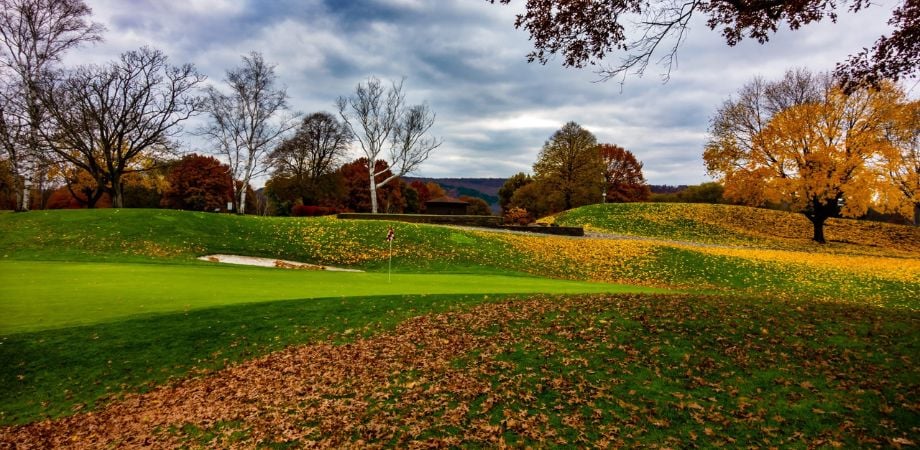
As you prepare your course for the end of the season, controlling broadleaf weeds before they go dormant for the winter should be top of mind. This will prevent them from overwintering and emerging in the spring.
Why Fall is the Best Time to Control Broadleaf Weeds
Broadleaf weeds like dandelion, clover, and ground ivy prepare for winter by moving sugars down into their roots. These sugars are meant to provide energy to the plant, but if you apply a herbicide in the fall, the chemistry will move down into the roots alongside the sugars, killing the weed. The best timeframe to apply herbicides this fall is from when the leaves start to change colors up until the ground freezes.
The Best Fall Herbicides
A liquid post-emergent herbicide with multiple active ingredients will provide the most effective control on your golf course. Two standout options include:
- ArmorTech SureZone, by United Turf Alliance, which provides quick control thanks to its four active ingredients
- Defendor, by Corteva, which is designed for use in low temperatures
Your ATS rep can share other product options with you, along with their benefits.
A Few Spray Application Tips
- Ensure daytime temperatures remain above 50°F for several consecutive days
- Apply on a clear, sunny day to assist in the uptake of the chemistry
- Clear the area of leaves before spraying
- Apply when conditions are not windy to avoid drift potential
- Use a surfactant when spraying weeds with waxy leaves
How Water Testing and Adjuvants Affect Spray Performance
Testing your course’s water and using adjuvants to increase spray coverage can help improve the efficacy of your spray application.
Water Testing
After choosing a product and properly calibrating your sprayer, it’s important to focus on your spray tank’s largest and most important input: water.
The pH and bicarbonate levels of the water you use are critical to the compatibility of your tank mix. High pH and bicarbonate levels can cause chemical breakdown, affecting how well the tank mix goes into the solution and the efficacy of the application. If certain products underperform, a water test may help identify the cause.
Water test results offer recommendations that are tailored to your course’s needs and can point you in the right direction. A lab near you will be able to provide an analysis, or you can bring a water sample to your local ATS location. We offer on-site testing and can have results back to you within a few minutes.
Low-Volume Applications
Adding an adjuvant to your solution can enhance the performance of low-volume applications. Adjuvants are particularly effective when using equipment like ride-on spreader/sprayers, which operate at reduced spray volumes.
Low-volume applications typically range from one-quarter to one-third gallons per thousand square feet, and a quality adjuvant will help them perform like high-volume applications. Adjuvants spread water droplets on the leaf surface, which help significantly increase spray coverage. Increased spray coverage improves the uptake of both foliar and root-absorbed herbicides.
Aquatrols’ LV is an adjuvant that combines the power of a water conditioner and a non-ionic surfactant to protect your chemistry while improving coverage. LV has a very low use rate, starting at only 16 fluid ounces per 100 gallons. Plus, it mixes with limited agitation.
With the right products and guidance, you can set your course up for a weed-free spring. Your ATS rep is here to help. They’ll work with you to develop a plan that’s tailored to your course’s needs. Reach out to them today, or find a rep with our locator tool.