Brown spots can affect the playability and aesthetic appeal of sports fields during the spring and summer. There are several potential causes of these spots, with fungal disease being one of the lesser known ones. Brown patch, summer patch, and dollar spot are three of the most common fungal diseases that can create brown patches, but each behaves a bit differently and causes different problems.
Brown Patch
Brown patch is a fungal disease that causes blotches of brown to appear on turf, ranging from around four inches to up to a foot wide. This fungus (Rhizoctonia solani) damages the grass blades themselves, causing them to turn brown and form visible spots on the field. These spots often have grayish-colored edges called smoke rings and can also exhibit a white, web-like layer known as mycelium on top, particularly noticeable on shorter-mown turf like baseball and softball fields.
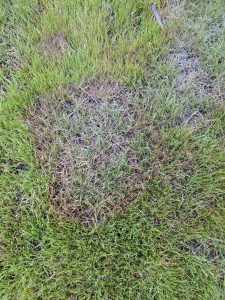
Heat and humidity play a significant role in the development of brown patch. Sports field managers should aerate, avoid overwatering, and avoid excessive nitrogen to help prevent brown patch. A preventative fungicide program can help sports field managers avoid brown patch altogether, too. If it’s too late in the season for prevention, brown patch can be easy to control with curative fungicides.
To prevent brown patch, you can apply fungicides before environmental conditions become favorable for the disease. Brown patch is most severe during extended periods of hot, humid weather. The disease can begin to develop when nighttime temperatures exceed 60°F, but is most severe when low and high temperatures are above 70°F and 90°F, respectively. Contact fungicides like chlorothalonil (where it is labeled) or mancozeb can be applied every 7–10 days, while systemic fungicides like flutolanil, trifloxystrobin, pyraclostrobin, and azoxystrobin can be applied every 14–21 days.
Summer Patch
Summer patch, much like brown patch, also creates brown spots ranging from four to twelve inches wide. It is caused by the Magnaporthe poae fungus, and appears on cool-season sports turf, showing the worst damage at the edges of patches. Unlike the causal fungus of brown patch, this fungus damages turf plants from the roots up rather than the blades down. To tell the difference, sports field managers can attempt to pull up a handful of grass. If it pulls up easily and dark, rotting roots are visible, it is almost certainly summer patch.
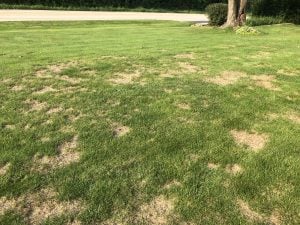
The causal fungus infects roots in the spring, but symptoms don’t appear until the heat of summer, meaning a preventative and curative fungicide plan will likely be needed. For summer patch control, the best time to make a preventative application is when soil temperatures range between 65°F and 70°F for several days. On the cultural side, infrequently but deeply irrigating, aerating, and maintaining proper nitrogen levels can help prevent summer patch.
Dollar Spot
Dollar spot (caused by the Clarireedia jacksonii fungus) creates smaller patches compared to brown patch and summer patch, which range from two to six inches wide. They appear on low-cut turf, such as baseball fields, as white to tan spots around the size of a silver dollar (one inch wide) before expanding. If you manage football and/or soccer fields that are cut higher, these lesions may exhibit a reddish/maroon color on the blades. One of the biggest signs of dollar spot is a layer of mycelium on leaf blades during dewy morning conditions.

Nitrogen deficiency is a major contributor to the development of dollar spot. Proper fertilization and irrigation are the first line of defense, with preventative fungicide applications providing additional protection. Preventative applications for dollar spot should take place when air temperatures reach 60°F. Curative fungicide options are also available when symptoms appear, or preventative applications are no longer viable. When using fungicides, be sure to rotate chemistries to avoid resistance.
To learn more about these diseases and how to protect your sports fields from them, reach out to your ATS rep for cultural tips and fungicide options.