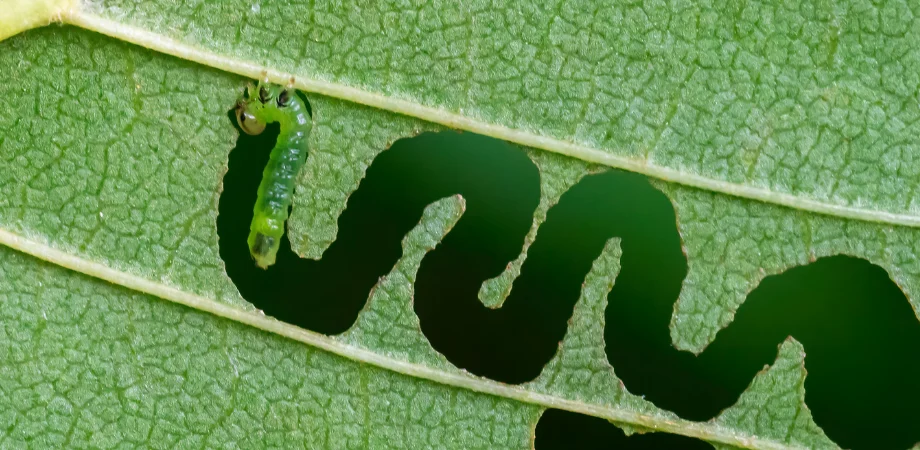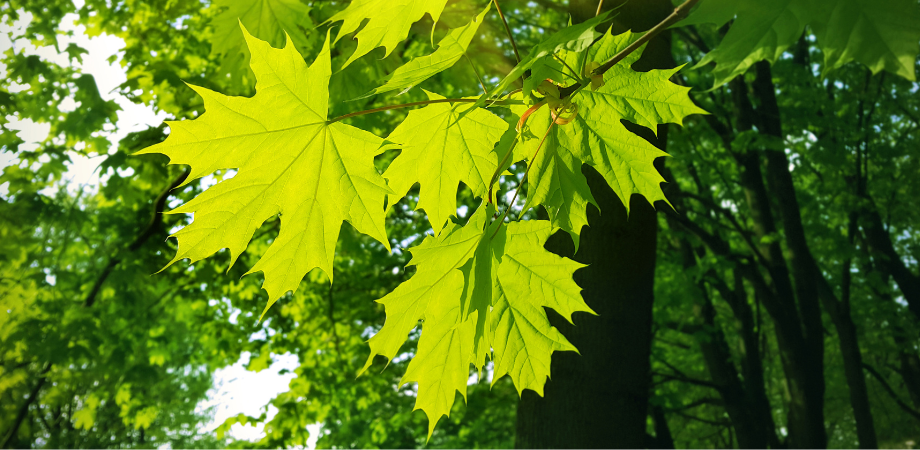
Did you notice small, clear-looking insects attached to fallen maple leaves in May or June? Those may have been petiole borer larvae.
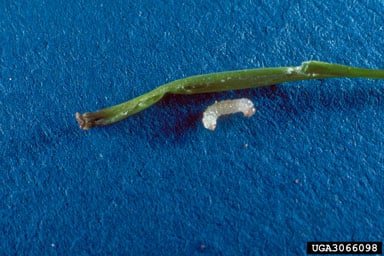
Maple petiole borers (Caulocampus acericaulis) are a type of sawfly that like to feed on maple trees. These insects appear annually, and the species’ adults lay their eggs inside the stems (petioles) of leaves during the spring season. Once they hatch, the larvae proceed to feed on the stems for about a month, causing leaves to drop prematurely.
When a leaf falls, it will still have a portion of the stem attached, and the end of the stem will be discolored. The larvae will remain inside the stem until the leaf hits the ground. They will then enter the soil and develop into pupae. Those pupae will then hatch into adults the following spring, lay their eggs, and start the cycle again.
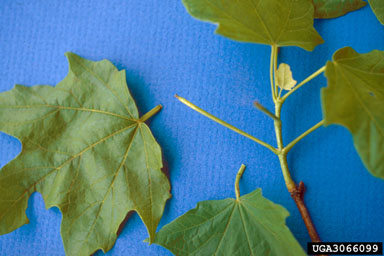
Seeing green, seemingly healthy leaves fall may give off the impression that the tree is sick or infested. Fortunately, that’s not the case. Petiole borers appear in small numbers and affect an insignificant number of leaves. For reference, a maple tree can withstand losing most of its leaves and recover without issue. If a tree has lost a lot of leaves for any reason, it’s a good idea to do a fall feeding so it’s well-prepared for next year.
There’s no need to worry about these insects, but others like the spotted lanternfly can cause major issues. If you’re concerned about an insect, even if it turns out not to pose a threat, don’t hesitate to reach out to your ATS rep.