As winter approaches, it’s time to start thinking about how you’ll protect your fields from adverse conditions and ensure a healthy green-up in the spring. The best option is to use growth covers.
We chatted with Zak Nissenbaum, president of CoverSports, so he could share his expertise about how growth covers work and why they’re such an important tool.
How Do Growth Covers Work?
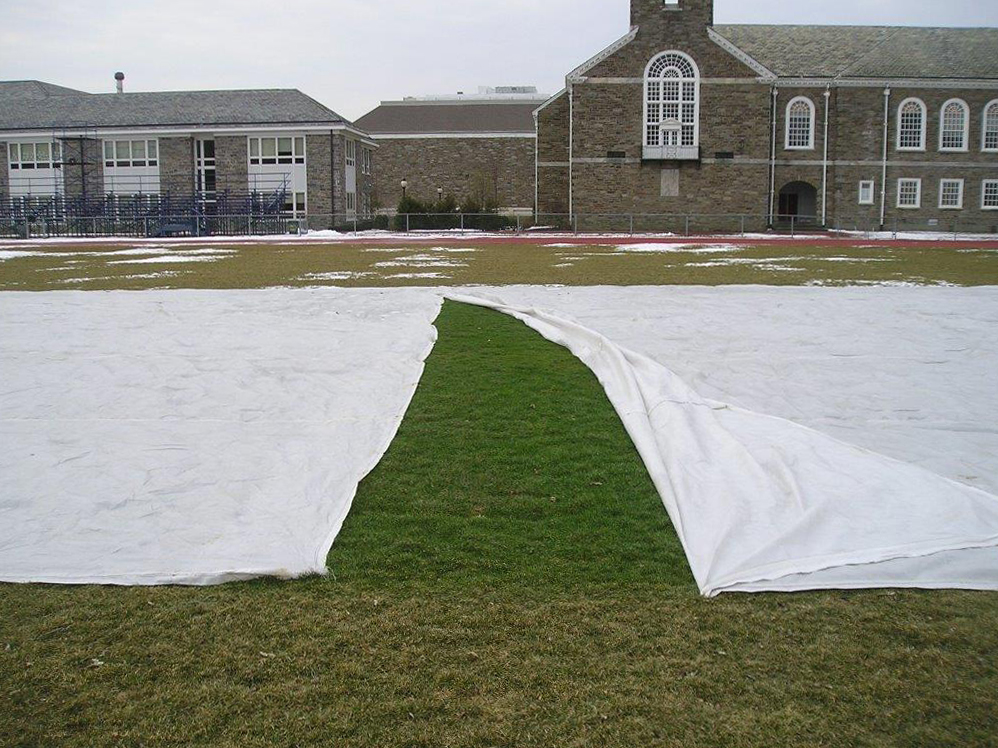
“They essentially serve as a greenhouse for the turf,” said Nissenbaum. “The material is tightly woven enough that it allows sunlight and moisture to pass through, and when it tries to evaporate, heat is retained underneath the cover.”
This insulated heat creates favorable growing conditions under the cover, essentially turning the area into its own microclimate. This is especially beneficial in the winter, when temperatures above the cover are very cold and dry.
What Are the Other Benefits of Growth Covers?
Growth covers offer an extended growing season in the fall and speed up recovery on fields during cold weather. They’re also used to “warm up” turfgrass in the spring, kickstarting growth to allow players to hit the field earlier.
“By covering the field, you’re keeping the root zone active, so nutrients are still moving and the turf can repair itself, rather than go completely dormant,” said Nissenbaum.
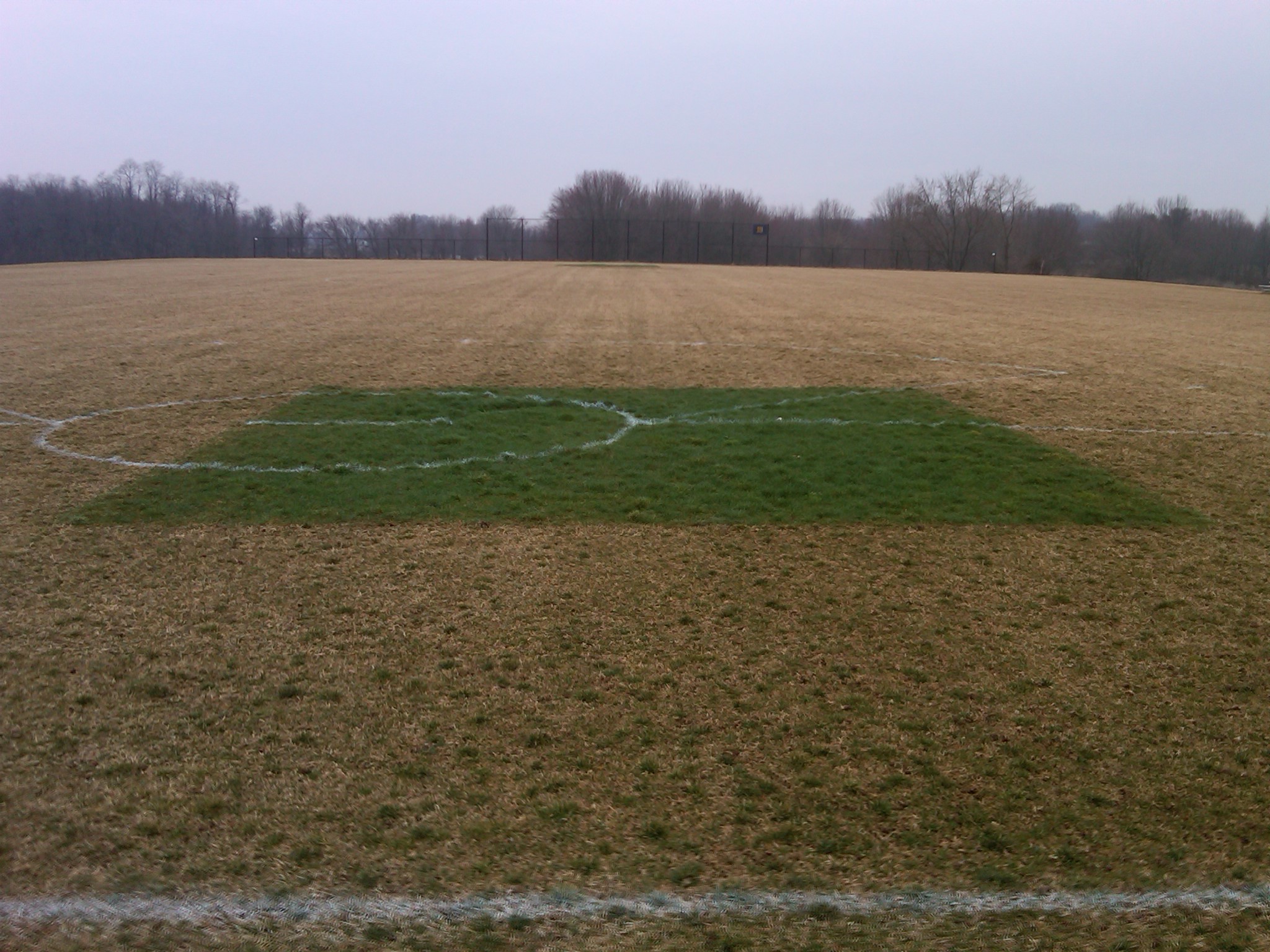
As a result, covered areas emerge denser and more uniform than uncovered areas, as shown in the image below.
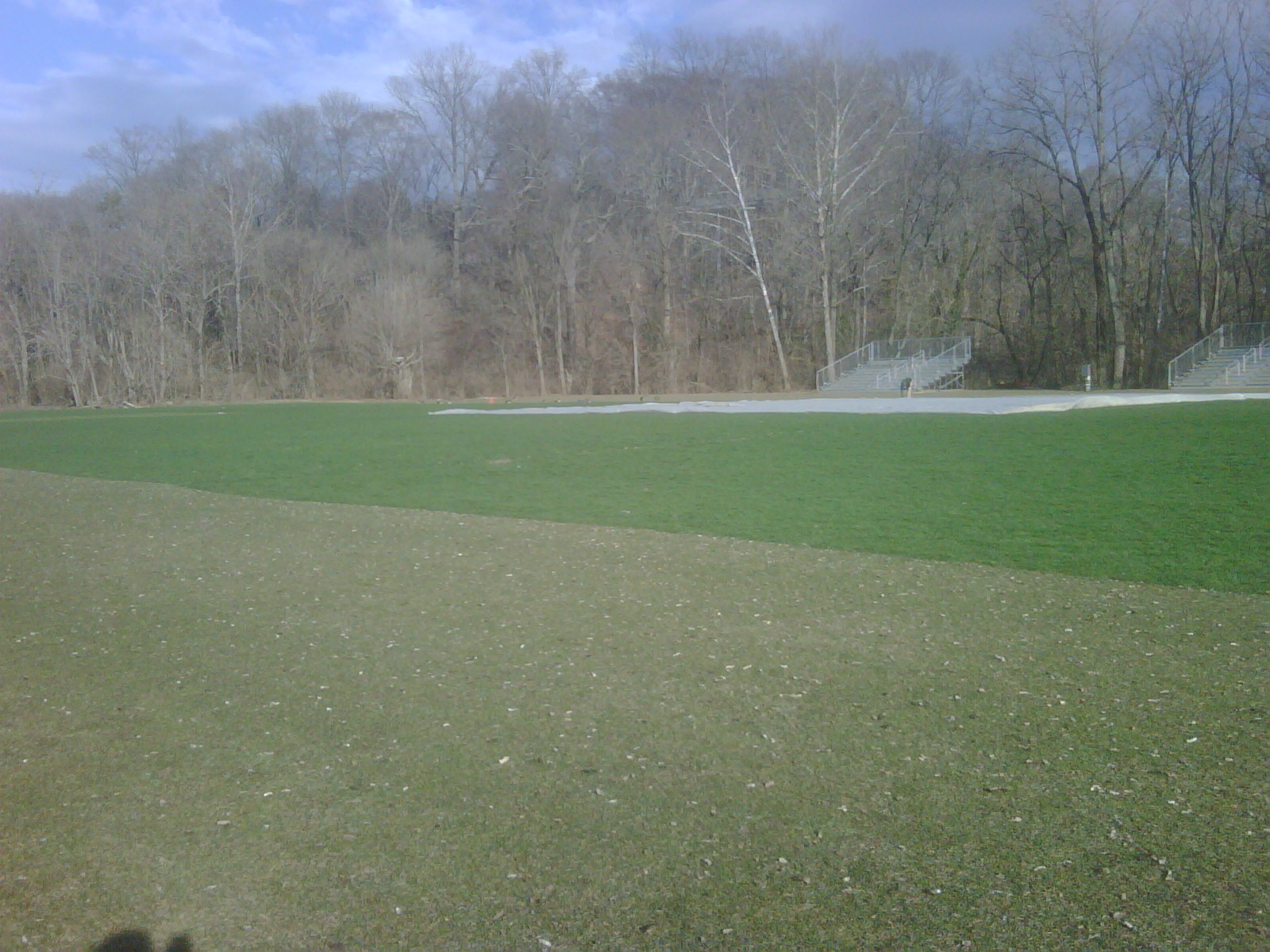
In the transition zone, using growth tarps on sports fields is more about protecting areas overseeded with bermudagrass and ryegrass from frost.
When Should I Put Down My Growth Cover?
The earlier, the better.
“Monitor the soil temperatures and put your covers down once they drop into the upper 30s and lower 40s (°F),” said Nissenbaum. “Also, make sure that the field is clean and free of debris before putting the covers down.”
If you’re in a more variable climate, you’ll want to remove the covers every once in a while.
“You can have the cover on all winter, but if you’re in the transition zone or get hit with an unusual warm spell, turf may yellow due to excess condensation,” said Nissenbaum. “This would lead to a mildewy/ammonia-like smell, which means there are anaerobic conditions underneath.”
This can be solved by “burping” the tarp, where you ventilate it by pulling out one of the sides or lifting it up to release the hot air. Many field managers do this every few days.
Can I Still Apply Products and Utilize a Growth Cover?
Absolutely, says Nissenbaum.
“All you would have to do is wait until your fungicide applications, paints, or what have you are dry before putting the cover on top,” said Nissenbaum.
How Do I Go About Choosing a Growth Cover?
Have a conversation with your local ATS sales rep to determine your turf’s needs, growth cover size, application timing, and longevity needs. ATS will then work with a high-quality manufacturer like CoverSports to provide a custom solution.
CoverSports’ covers are clear, so you can see what’s going on underneath when you’re monitoring growth. They include a six-ply hem on all four sides with grommets every five feet and a finished edge. The finished edge is much less likely to fray or rip than products with an unfinished edge. Their covers are durable, come with an eight-year warranty, and are available in standard and custom sizes. You can learn more at their website or from your ATS rep.
“Other manufacturers have an unfinished edge, so they expect the field manager to tuck the covers in by hand and put the staples through,” said Nissenbaum. “People really like the fact that we have a finished edge.”
All the photos featured in this blog were sent in by CoverSports customers, and Nissenbaum shared that they often get unsolicited thank-yous and photos showing off results.
“A lot of customers can’t believe the difference between a covered area and an uncovered area,” said Nissenbaum. “The differences are so stark, and people are blown away by the better green-up, root density, and how easy the covers are to handle.”
Some Parting Advice
If you haven’t used growth covers before or aren’t sure if they’ll work well, choose a small area first and test it out.
“After a couple of weeks, you should see a pretty noticeable difference,” said Nissenbaum. “Just monitor the conditions underneath the cover, and you should see very quickly that they’re effective.”
For more information on growth covers, reach out to your ATS rep, and if you’re new to ATS, get connected with a rep here in seconds.