

There are a few things you should do on your customers’ properties to fix issues caused during the winter to prepare them for the spring and summer months.
Take A Look At Your Spray Schedule
Review your ornamental spray schedule, specifically your timing and products you plan to use or diseases you want to control. Application start dates will depend on your geography; check with your local ATS rep for the best timing in your area. With this in mind, do you have what you need to get started in terms of fungicides (TriTek), insecticides (IMD 2F), and copper (Kalmor)?
Think About Bed Pre-Emergents
Snapshot and Crew are the ‘big two’ for landscape beds. Crew is my number one pick because if it accidentally gets onto turf, it does no damage. It’s safe in established beds or lawn applications.
Dimension or Trammel are the best options for beds that annuals will be planted into. For landscape beds that had nutsedge issues last year, Freehand would be my top pick. Your ATS rep can help you decide which option is right for each situation.
Consider Another LeafShield Application
You likely applied LeafShield before the winter to keep ornamentals protected, and it’s a good idea to make another application to conifers and other broadleaf evergreens now. This will protect them from any prolonged, drying winter winds as well as strong spring winds after the snow melts.
Prune Broken, Diseased, and Damaged Branches
As snow disappears, it will reveal tree and shrub branch breakage. These will need to be pruned. Cankers will need to be pruned as well. You’ll also want to prune branches that were damaged by fire blight last season before new leaves emerge.
Keep in mind that some ornamentals may have to be removed due to heavy damage caused by snowplows. Sometimes, snowplow drivers don’t notice small trees and shrubs and end up creating large snow piles on top of them.
Watch for Bud Break
When you’re on customers’ properties, keep an eye out for bud swell so you’re prepared to make fungicide and insecticide applications as soon as bud break occurs. Tracking growing degree days (GDD) in your area will help.
Check for Vole, Rabbit, and Deer Damage
Voles love good snow cover, and they may have killed plants over the winter. If a plant isn’t leafing out when it should, a vole may have gotten to it. Rabbits can do the same damage to small shrubs, and unless you catch them in the act, it is difficult to determine who did the damage. Deer damage will be much more serious, of course. If the bark has been stripped all the way around a shrub or tree trunk, then expect no chance of recovery since the phloem has been removed.
Rectify Ice Melt Damage
Trees and ornamentals affected by excess sodium chloride will lose density and have a desiccated, less colorful appearance. Some of those plants will die, and those that survive will be unhealthy and visually unappealing. Remove the dead plants and do your best to nurse the damaged ones back to health.
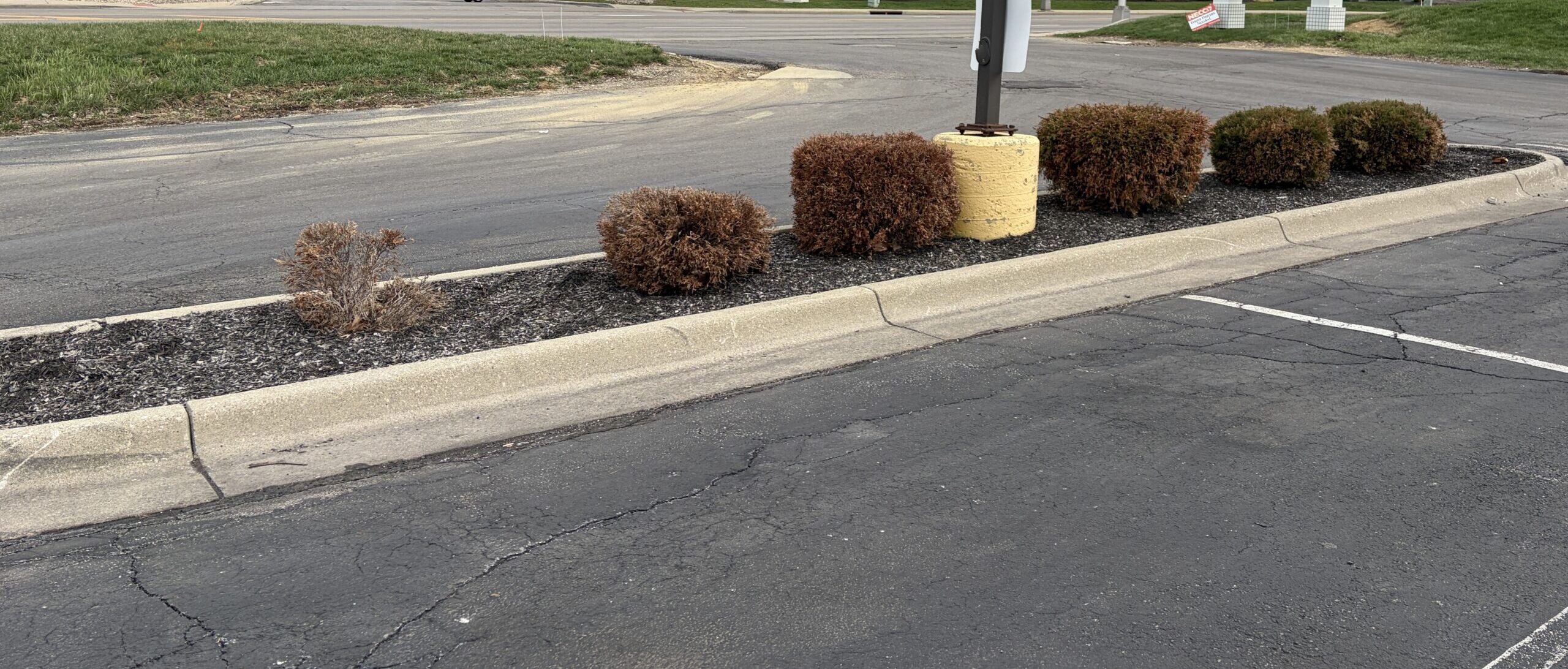
Next winter, apply Leafshield, a wax-like anti-dessicant, to plants to repel ice melt spray and salt (as well as wind and cold) prior to the first snow. Spread some granular gypsum along sidewalks, parking lots, landscape beds, turf areas, and other areas where salt has the opportunity to reach turf and ornamentals. The calcium in gypsum essentially allows sodium to leach lower into the soil profile, mitigating the negative effects of salt accumulation.
Your Next Steps
All of these are important steps, but pre-emergent applications and pruning and removal of dead and diseased branches will offer the biggest revenue potential for your company. For additional tips as we approach the spring, reach out to your ATS rep.


