The University of Michigan needs no introduction, but the amount of effort it takes to keep its sports fields in shape definitely flies under the radar. It’s common knowledge, however, for Jay DeMink, CSFM, who has served as the university’s sports turf specialist for the past 17 years.
After starting his career in the U.S. Navy, DeMink moved his way into the pest control world. One day, after dealing with a particularly nasty roach infestation, DeMink felt burned out, and his wife encouraged him to think about what he truly wanted to do. It was his 30th birthday, so DeMink spent the day getting the gears turning.
“I love baseball. That was always my event,” said DeMink. “I knew I wasn’t going to be a baseball player, and I love cutting grass, so I thought I’d put two and two together.”
That goal soon became a reality. Now, when it comes to his role at the university, he definitely still has his hands full, minus the bugs.
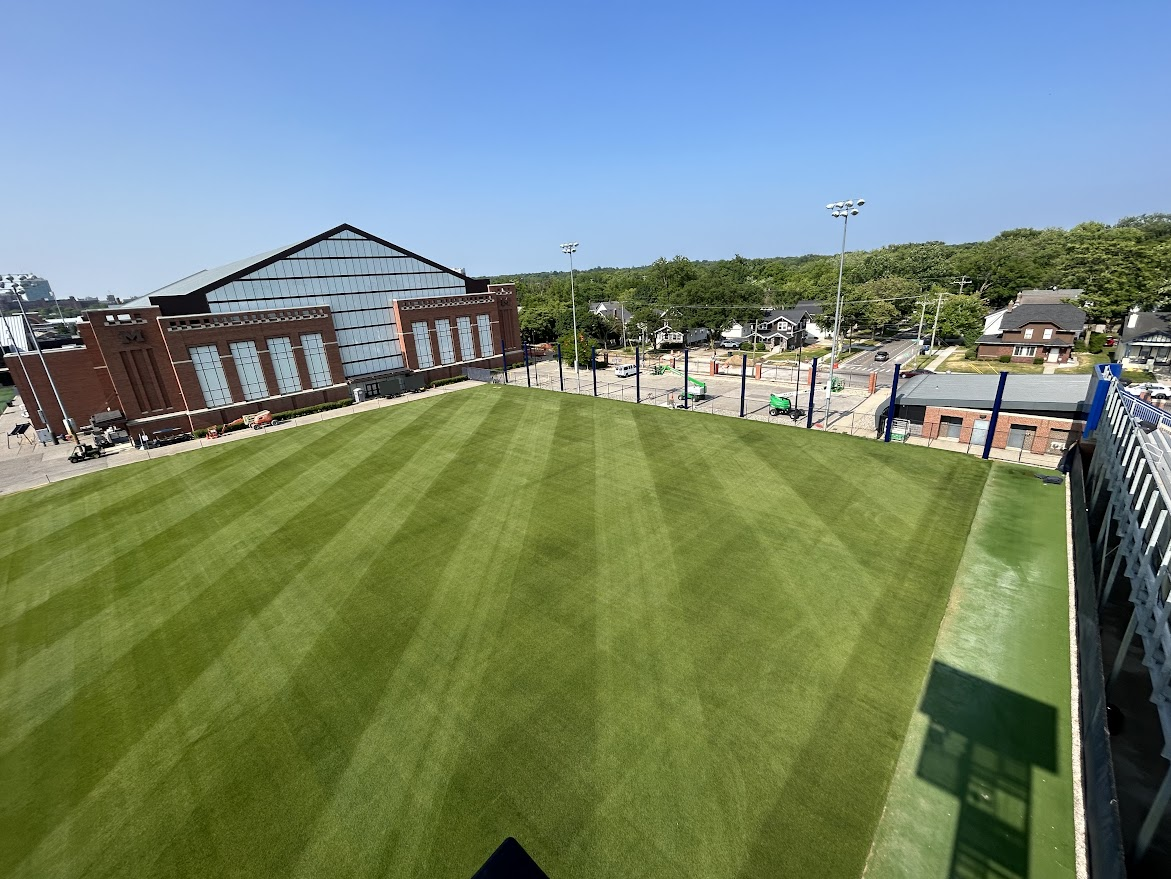
“Essentially, I’m in charge of the practice football, baseball, and softball fields, as well as Ferry Field, which is the school’s original football field,” said DeMink.
A Focus on Football
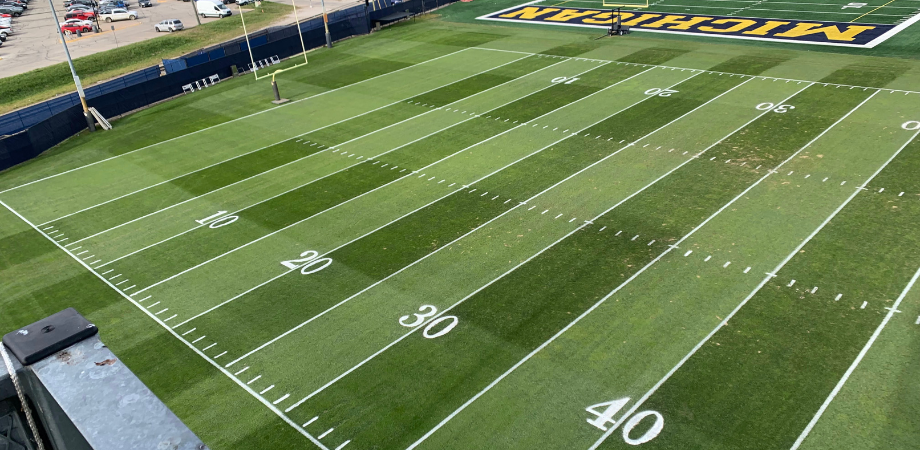
While all the fields require his attention, DeMink says his primary focus is the football fields, due to the amount of work it takes to keep them in playable condition.
“The biggest concern [on the fields] is the weather,” said DeMink. “If it’s raining a lot, how’s the turf going to hold up? How’s the rooting going to hold? This is especially true for the practice field, which gets pretty beat up.”
The playoff season extends into the winter, so maintaining the practice field becomes even tougher once the chilly air (and Michigan snow) rolls in post-Thanksgiving, around the time the normal season ends.
“If we make it to the playoffs, that extends things into December,” said DeMink. “If we get there this year, I’d use a lot of growth blankets to try and keep the field as warm as possible and keep it growing.”
By November 15, DeMink and his crew will shut off irrigation because they don’t know when the first big freeze will arrive. After that point, they’re at the whim of the weather in terms of how much water the field will get. The best-case scenario is that the field is hard frozen by that point, but DeMink and the crew will cross that bridge if they get to it.
Keeping the Field Fresh
When it comes to caring for the school’s turf all season long through various extremes, DeMink is a big advocate of the Foliar-Pak line, which he has been using for over five years.
“We put in new turf a couple of years ago, and it’s holding up very well,” said DeMink. “The root zone is phenomenal, and I have to credit that to the Play-On product. I really, really love that stuff.”
“Play-On really helps with my rooting, since the field needs to be able to hold up your 300-plus pound linemen and coaches running around the 25-yard line,” DeMink continued. “I’ve noticed how much the field has held up since I started using that product, and a lot fewer divots that have had to be replaced.”
In addition to Play-On, DeMink also uses Bio 12-6-6 and Grow-In. Both he and the university like those products because they’re effective and organic-based, the latter of which helps them with their sustainability efforts.
Overseeding is another important part of field maintenance, and DeMink relies heavily on Kentucky bluegrass and ryegrass.
“I’ve been using Mountain View 365 Kentucky bluegrass for the most part and some Barenbrug ryegrass,” said DeMink. “I overseed constantly, and we probably went through six or seven hundred pounds in a year just trying to keep up with what was gone and regrow it.”
Now, the field requires much less seed to recover. Shortly after winning the national football championship in 2023, the university replaced the team’s then-15-year-old practice field.
“The first time Coach Harbaugh went on the new practice field, he said, ‘Now this field makes me feel like a Michigan man,’” said DeMink. “That makes me feel pretty good, and when football players and strength and conditioning coaches come up to me, they say how much they love the grass.”
DeMink also said that the field looks great on film and ends up with fewer divots than the previous one—two big wins.
When it comes to all these successes, DeMink credits every accomplishment to the collective grounds team, saying, “It takes a village.”
Building Trust
There are plenty of distributors out there, but DeMink believes that the customer service and knowledge provided by ATS and our reps help us stand out.
“All in all, [it’s a] great company,” said DeMink. “If there are any questions Steve doesn’t know the answer to, he gets them for me. He’s probably one of the smartest, well-read turf people I know, and it’s nice to have his knowledge to fall back on.”
When asked what he’d tell someone about ATS, DeMink said, “They have a great product line, but I’m sure other companies do as well. It’s the personal service I get that sets them apart.”
When it comes to connecting with reps, DeMink said, “My success is their success, and I feel like that’s reciprocated because if I need something, it shows up, or they’ll make an extra trip out of their way. It would be hard for me to go with a different company right now.”

“It really feels like they’re part of your team, and that’s huge to me,” said DeMink.
If you’re interested in the personalized advice and products that ATS can offer you, our Find Your Rep tool can help you connect with a rep near you in seconds. Reach out today and start experiencing the ATS difference.