
Moss and algae thrive in wet, well-shaded environments but are not limited to growing in those areas. Thanks to substantial rainfall and fewer daylight hours, moss and algae often appear on bentgrass greens during mild winters. Both of these organisms spread quickly and can harm the health and playability of your turf, but the right cultural practices and chemicals will control them.
Understanding Moss on Bentgrass Greens
Mosses are non-vascular plants that use rhizoids to anchor themselves on the turf’s surface. They absorb water and nutrients, which they use to survive and reproduce. Mosses typically spread via spores, but any vegetative fragments picked up by foot traffic or equipment like mowers can also cause them to spread.
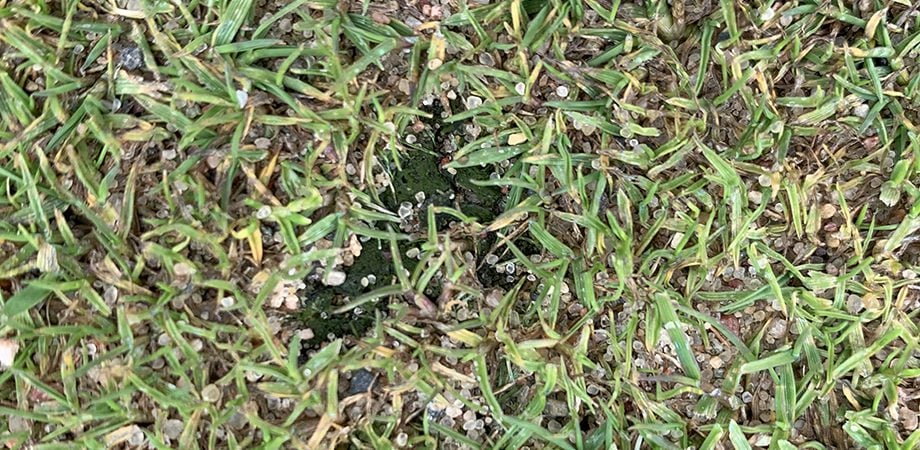
Problems Caused by Moss on Bentgrass Greens
- Moss can negatively impact playability. Moss is soft and spongy—much different than bentgrass—which disrupts uniformity and can affect ball roll.
- Moss can increase compaction. Moss retains moisture, which can lead to denser soil.
- Moss can inhibit water infiltration. Moss is incredibly dense, which can keep water from entering the soil. This can stress the turf and lead to shallow roots.
- Moss can encourage disease formation. Moss competes with bentgrass for nutrients and space, which weakens the turf and makes it more susceptible to disease.
Understanding Algae on Bentgrass Greens
Algae are photosynthetic organisms that appear as a greenish-black crust on the turf’s surface. Like mosses, they absorb water and nutrients to survive and reproduce via spores. They can also be tracked and spread by shoes, tools, and equipment.
Problems Caused by Algae on Bentgrass Greens
- Algae can affect playability. The sliminess of algae can affect ball roll and potentially make conditions slippery for players.
- Algae can inhibit water infiltration. The crust formed by algae can keep water from penetrating the soil and can waterlog the turf.
- Algae can block much-needed sunlight. Layers of algae can cover grass blades, blocking the sun and reducing oxygen availability, which weakens the turf.
- Algae can outcompete bentgrass. In areas with high surface moisture and low nitrogen, algae can overtake bentgrass.
Cultural Practices to Prevent Moss and Algae
Since moss and algae spread through spores, affected areas can rapidly grow from just a few square inches to a few square feet. This makes preventative measures incredibly important. Although sand-based and frequently topdressed greens are prime candidates for algae and moss development, the right cultural practices can help your bentgrass outcompete these organisms.
While it’s impossible to make short winter days longer, you can trim trees and shrubs to increase light exposure and airflow. This will help keep the turf dry and discourage moss and algae growth. You can also aerate and topdress to improve drainage, alleviate soil compaction, and eliminate thatch. Consider using infiltration soil surfactants to improve the flow of water, too. Keeping nitrogen levels at an acceptable level will improve your bentgrass’ density, giving it an edge over moss and algae—especially in shady areas.
Controlling Moss With Herbicides on Bentgrass Greens
A selective herbicide containing carfentrazone can control moss. FMC’s QuickSilver herbicide contains carfentrazone (21.3%) and is designed to control silvery thread moss—the most common type of moss that appears on bentgrass. On bentgrass greens, it should be applied at a rate of 6.7 fluid ounces per acre, followed by a second application at the same rate two weeks later.
Controlling Algae With Fungicides on Bentgrass Greens
Fungicides containing chlorothalonil and mancozeb can be used as algaecides and are especially effective when used preventatively. ArmorTech CLT products (825 and 720), which contain chlorothalonil, and SePRO Junction, which contains mancozeb (15%) and copper hydroxide (46.1%), will eliminate algae on your bentgrass.
With the right products and cultural practices, you can keep your course free of moss and algae. As you prepare your greens for the winter, reach out to your ATS rep for more tips and product recommendations.