
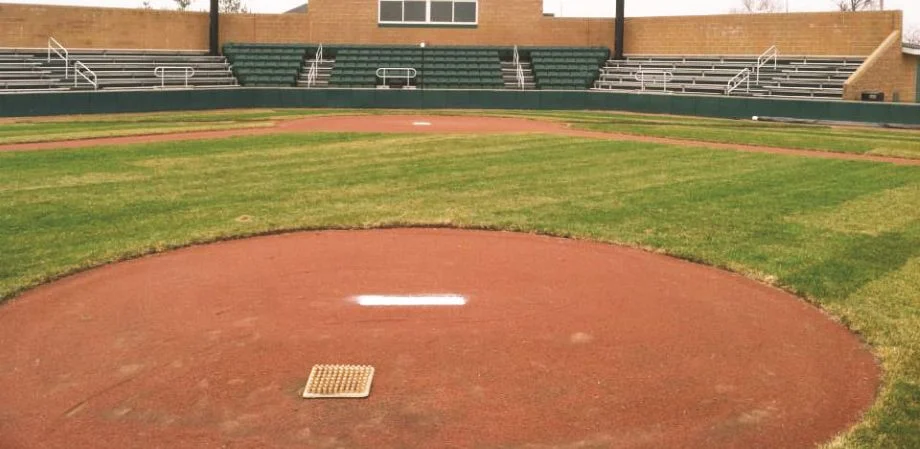
A lot goes into maintaining a high school baseball field, but one of the main things that gets overlooked is keeping the pitcher’s mound and home plate area covered.
Keeping them covered locks in moisture, which keeps them ready for play. It also prevents the clay from drying out, which can happen if these areas sit uncovered for a lengthy period of time.
Moisture Management Tips
The more moisture you have locked into your pitcher’s mound and home plate area going into an event, the better off you’re going to be. This is especially true for night or afternoon games. Using a tarp to cover the area will not only keep that moisture locked in, but it’ll also prevent you from having to remove dried-out clay before games.
Field managers will usually uncover their mounds partway through the day, and they keep moisture locked in by using thick mats made of artificial turf. These are often chosen because their weight helps hold in moisture, especially down through the pitching rubber in the landing area on the mound. The same thing goes for the home plate area. After uncovering the area, field managers keep hitting mats on top to help hold that moisture in. Then, these get removed before the tarps go back on.
One of the biggest things, at least when I was in the game, is that we’d always water our mound down really heavily after a game, and then once we got all our other maintenance done, like packing the clay, we’d put a nice coating of water on it. Then, we’d cover the mound to help lock that moisture in. I definitely recommend doing this.
Tarp Tips
I see a lot of sandbags being used to keep tarps down, but I always liked using 16-penny nails (also called 16d nails). We would tack on a washer on the top to get the nail flushed to the grommet, and I’d paint them a bright color like white or yellow. Surveyor nails can work, too.
If you use stakes, tires, or sandbags, those can become a trip hazard if you have practice while the tarp is on. That’s why I prefer nails.
Sometimes, field managers will use on-deck circles as a substitute for tarps. If they get wet, especially if they’re made out of artificial turf, they can get pretty heavy and end up locking in too much moisture, which makes the clay too sticky. That’s why I recommend sticking with a tarp.
I do encounter fields from time to time that own tarps, but don’t use them. Mounds end up baking in the sun and drying out. Or, a mound is left uncovered for a night, and heavy rain rolls through, washing out the mound and creating little ditches and crevices. Using tarps all the time will help you avoid the time-consuming and money-consuming maintenance issues that arise when they aren’t used.
Mound and on-plate tarps, in addition to protecting your field, are also a great way to show school spirit. Our partnership with Coversports allows us to offer custom designs, so you can put your school colors and logos on your tarps.
If you’re looking to purchase tarps or just have questions about them, reach out to your ATS rep today.


