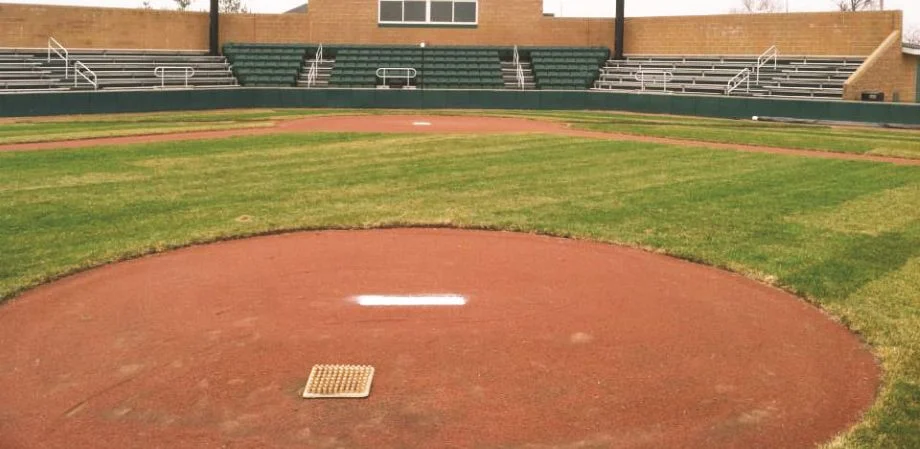
Fall spells the end of most baseball and softball seasons, but not infield maintenance. One maintenance practice that should be taken care of in the fall (and regularly throughout the season) is infield edging.
Why Edge the Infield in the Fall?
Edging in the fall is essential for several reasons.
- Safety: Over time, the edges of an infield can become uneven and jagged, which can lead to tripping, twisted ankles, and other incidents/injuries. Edging ensures a smooth and safe playing surface.
- Playability: A well-edged infield provides a neater and more professional appearance. It also contributes to consistent ball rolls and bounces, ensuring a fair and enjoyable game.
- Prevents overgrowth: Edging during the fall helps prevent grass and vegetation from encroaching onto the infield, ensuring a clearly defined playing area for the next season.
While not an “essential benefit” per se, edging in the fall will drastically cut down on the amount of manual labor that is needed in the spring.
How to Edge the Infield
Substantial amounts of turf may be extracted when edging in the fall post-season. So, proper planning, like measuring your edges, must be considered. Follow the steps below to measure your edges.
- Baselines: Stretch out the string you would lay for your foul line and measure each edge off the line. Create a simple drawing. The measurement varies.
- Infield: Put all three bases in their anchors. Measure from the base’s back corner to the infield’s front edge. The measurement is typically three feet.
- Base cutouts: With a 100-foot tape, measure from the anchor to the turf edge. The measurement is usually 15 feet.
- Back arc: With the same 100-foot tape, measure from the front of the pitcher’s rubber to the back arc. The measurement is typically 95 feet.
- The warning track: Measure off the wall/chain link fence.
Once you have your measurements, it’s time to edge the surface. Using a tool like a blade edger or hand-pushed sod cutter, carefully cut along the measured edge, removing excess grass and soil. Follow the line precisely, creating a clean and defined edge. This is a great time to add Advanced Engineered Soil to create a perfect transition between the grass surface and the infield mix. Advanced Engineered Soils can be purchased in 2,000-pound super sacks for your routine maintenance.
Once the edging is completed, fill in the low areas and tamp to firm up this area. A roller can also be used in the right conditions to achieve a smooth transition. Then, take the field back to in-season dimensions.
For additional tips and advice as you plan for next season, reach out to your ATS rep today.