Spring cleaning isn’t just for your house. It’s time to take a look at your stock room to make sure the chemicals, fertilizers, and other products that you’re using are still ready to perform.
From expiration dates to temperature control, there are a lot of factors that go into how long a product stays effective. It’s unlikely that an expired and/or damaged product will have an adverse effect on a customer’s property, but its efficacy will be severely degraded if you choose to use it. Think about an expired allergy pill; It may still relieve some of your symptoms, but it certainly won’t do the job nearly as well as it should. Applying this same logic to the lawn care world means you’ll likely have upset customers, callbacks, and the need to make unexpected purchases if you use old, degraded product. None of those are good for your business’ reputation or bottom line.
Before You Get Started, Answer Some Key Questions
To avoid this potential problem entirely, it’s time to audit your stock room. Here are a few questions that you need to ask yourself:
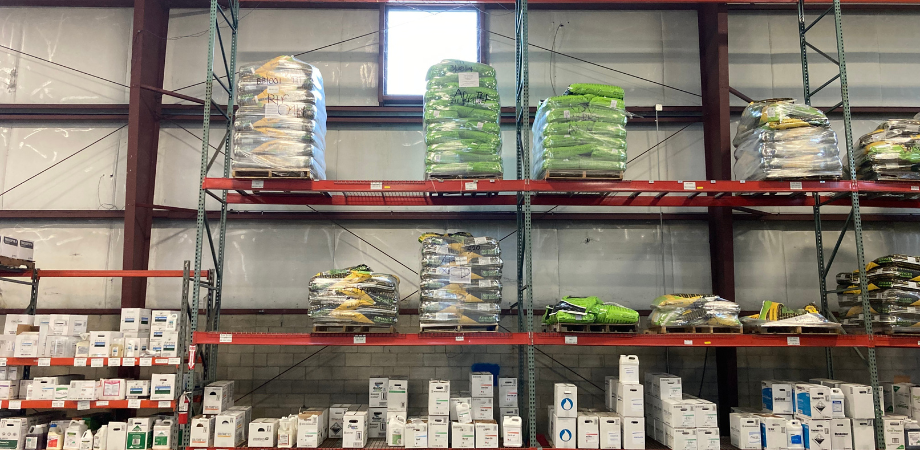
Am I storing my product on shelves?
Granular products, seed, and fertilizer are especially susceptible to pests like rodents and insects. If you notice holes in bags—especially seed bags—that are not elevated, they have likely become the new home and/or feeding ground of unwanted guests.
What is the temperature range in my storage facility?
Many products have a specified temperature range that they must be stored within to remain effective. If they are exposed to extreme temperatures (hot and/or cold), these products can be rendered useless.
Is my storage facility dry?
Moisture is another enemy of granular products, seed, and fertilizer. Any granular products that are “clumped” together have likely been compromised by moisture. This can make applying these products very difficult. Additionally, if there are rips and tears in seed bags, moisture can cause seedlings to germinate before they ever see soil.
Let’s Talk Life Expectancy
Some products have a significantly longer shelf life than others. When you’re cleaning house, start by checking every label. Each label will almost certainly tell you two things: how long the product will last in storage and the conditions required to keep it safe.
If properly stored and unopened, herbicides, insecticides, and fungicides typically last between two to five years. Any products containing biologics will have a much shorter lifespan—one to three years, depending on the product. On the other hand, fertilizers can last upwards of a decade.
Some products will show visual signs of aging and/or damage. For example, liquid suspension concentrates may exhibit signs of ingredient separation if they’ve been sitting for a long time or have been damaged. Use your best judgment when determining whether a liquid product simply needs to be shaken to make it uniform again (or pre-mixed in the case of clumped granular product) or whether it’s time to toss it.
Run a Tight Ship
Once you’ve gone through everything, it’s a good idea to reevaluate what you need to make it through the season—especially if you had to toss a lot of product. Having some extra product on hand is recommended for a buffer, but too much can mean money down the drain.
The first-in, first-out (commonly abbreviated as FIFO) method is a great way to avoid any spoilage issues in the future. If you do have any extra product left after the season is over, instead of it getting pushed to the back of the shelf, that’s what should be used first next season.
Keeping things organized takes a lot of discipline, especially on a scale as large as this, but the potential time and dollar savings make it worth doing. Remember that your Advanced Turf Solutions rep is always here to give you advice tailored to your needs, so give them a call today if you have any questions about product storage or your spring product needs.