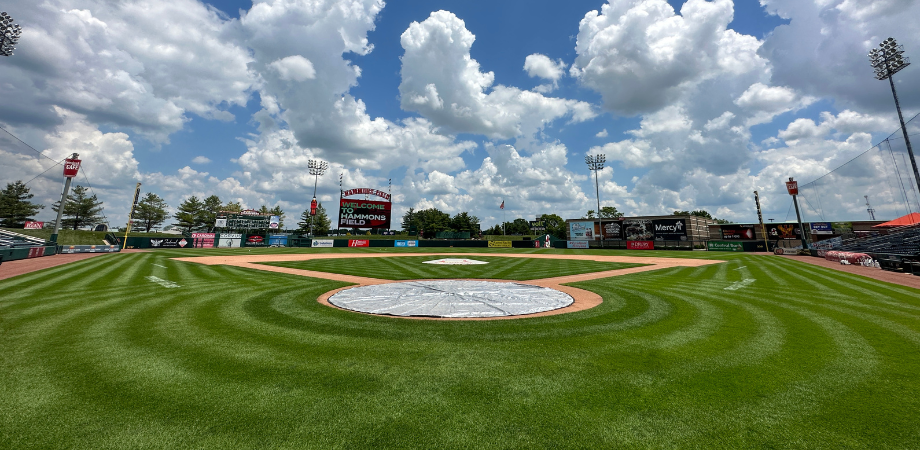
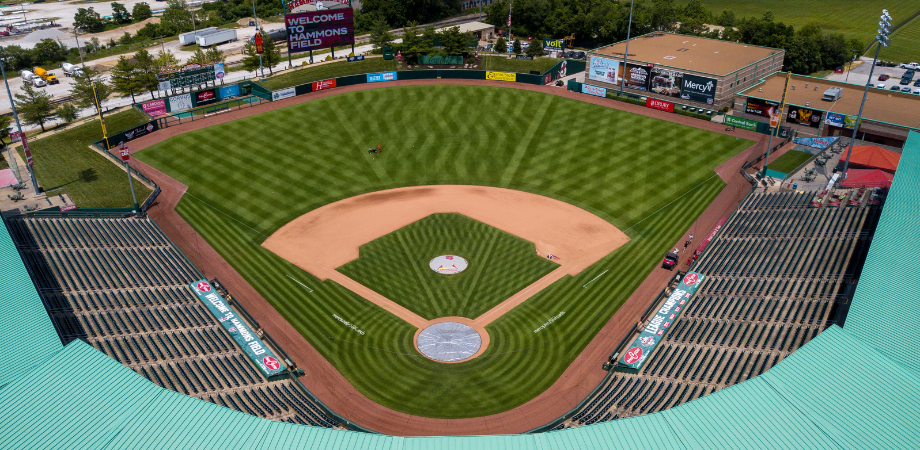
When it comes to baseball stadiums, you’ll be hard-pressed to find one with a more dedicated crew than the one at Hammons Field. As southern Missouri’s very own Double-A baseball field, it receives a lot of traffic—both on the field and in the stands.
It’s home to both the Springfield Cardinals (MiLB) and the Missouri State Bears (NCAA Division I) and hosts a slew of other teams and events—over 100 every year. Averaging about two events a week means that managers Derek Edwards, Director of Field and Stadium Operations, and Nathan Strait, Manager of Field Operations, along with their fifteen part-time staff members, have their work cut out for them when it comes to keeping the field healthy, safe, and ready for action at a moment’s notice.
These efforts certainly don’t go unnoticed, but the icing on the cake last year was Hammons Field being named the Sports Turf Management Association’s (SFMA) Professional Baseball Field of the Year. For Edwards and Strait, this recognition is huge.
“We’ve been chasing this award for some time now, and it’s created a renewed appreciation for what we do and what our staff contributes every day,” said Strait.
To put it in perspective, since 1988, just one professional baseball field in the United States or Canada has been selected for this award per year—it’s a rare accomplishment.
But, in order for players and fans to see sunshine and roses (or, in this case, well-maintained turfgrass and infield material), Edwards, Strait, and the team have to tackle a constant barrage of wear and less-than-ideal weather conditions. Plus, since the field’s roots are almost old enough to drink, the field requires a bit more love.
“We have a 20-year-old root zone and field, so we have to pick up on our cultural practices, aeration, and topdressing, and just stay on top of that to make sure the field is draining at an optimal level,” said Edwards. “Everybody’s got their own issues that they deal with on a day-to-day basis, but one thing we take pride in is setting a cultural practice schedule that we can follow throughout the season and train our guys on to provide the best quality pitcher’s mounds, infield surface—just making sure everything is dialed in on a daily basis.”
Dialing in With the Right Strategy
A big part of Edwards and Strait’s strategy is keeping the field well-fed, and the crew puts their trust in Foliar-Pak products.
“The Foliar-Pak line is our main source of nutrients here for the grass at the stadium,” said Edwards. “We put it on a pretty regimented program using quite a few products, and that provides a really good, consistent surface with a good color pop.”
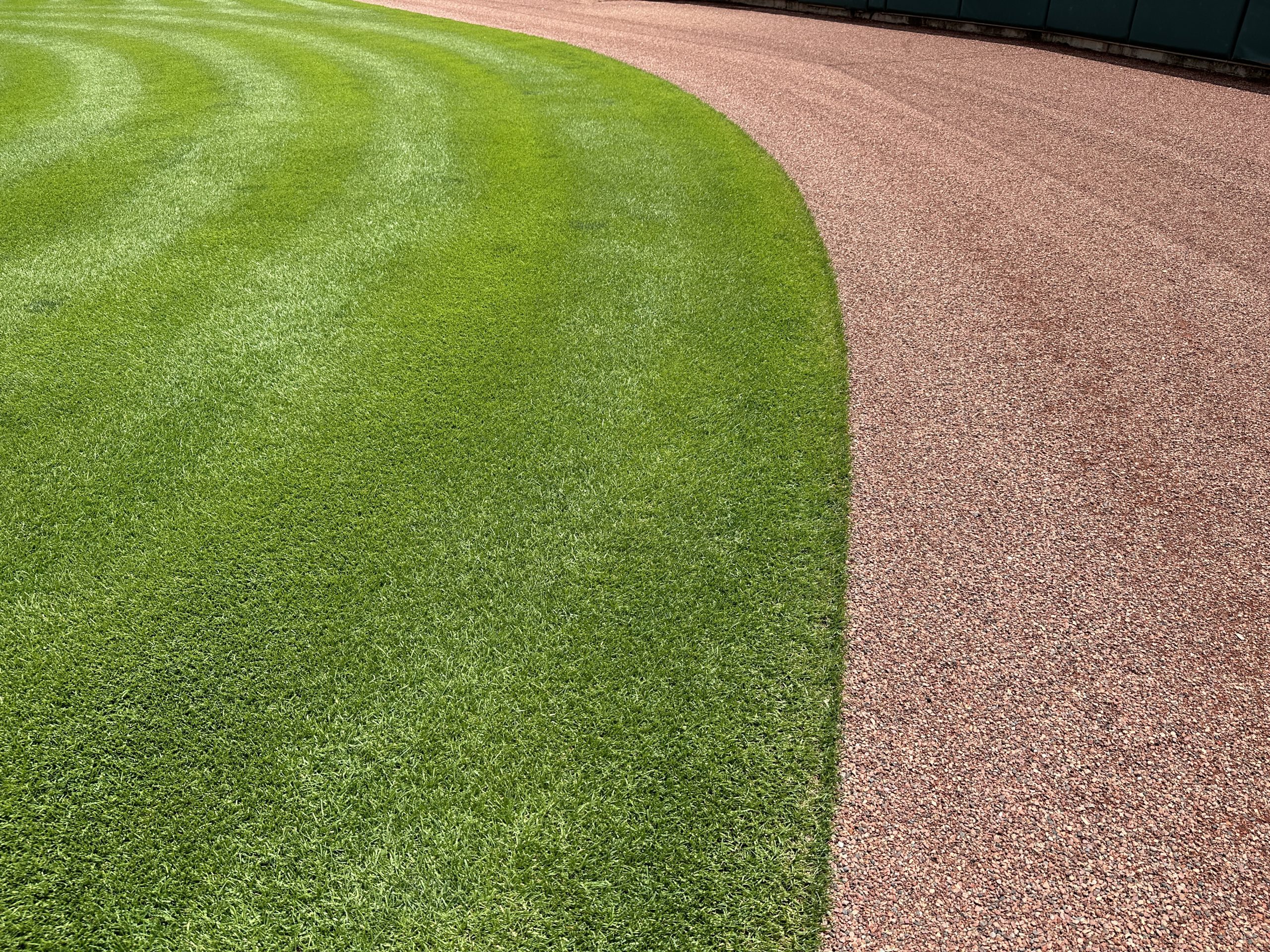
When it comes to the infield, moisture management is always top of mind. The crew relies on ATS2000, an Advanced Infield Conditioner that’s part of the Advanced Infield Solutions product line.
“The ATS2000 conditioner is really a great tool that helps manage the infield skin moisture,” said Edwards. “We don’t see a lot of that product breaking down, so we’re able to stretch its life a little bit.”
“We definitely switch it out less than we ever have before with other products,” Strait agreed. “It holds true, doesn’t get too dusty, and we’re able to use it longer and use it well.”
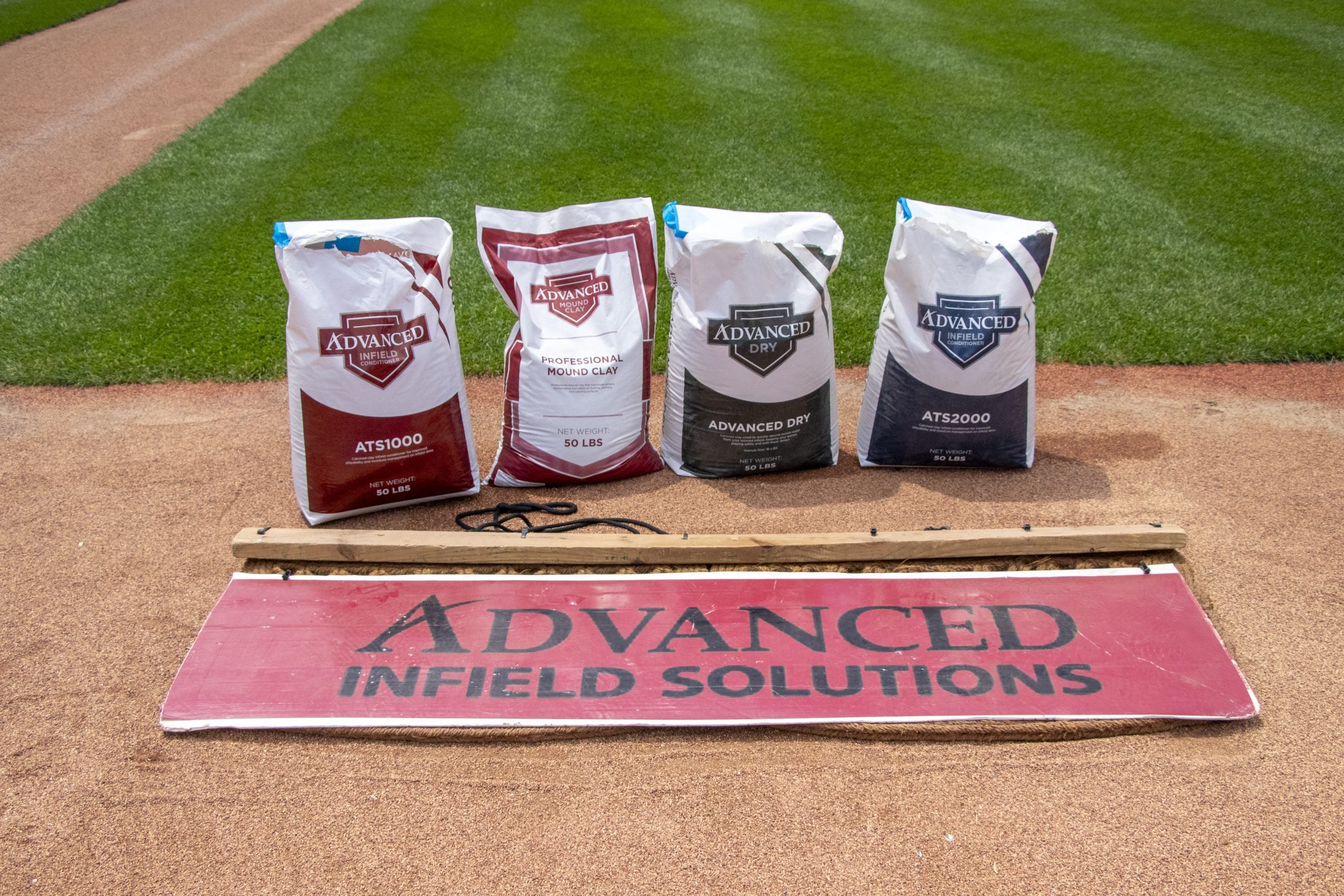
“Another product in the Advanced Infield Solutions line we use is the Advanced Gumbo for our pitching mounds,” said Edwards. “It’s a product that all our pitchers love; it holds up well with very minimal disruption, it’s easy to fix [after games], and it’s just a great product to have around to keep things safe for the pitchers and the hitters at home plate.”
They’re Not Afraid of a Challenge
Having a space as large as Hammons Field means that it’s able to host a lot more than baseball games, which presented some pretty unique opportunities last year.
“A new challenge we faced this past season was hosting our first concert,” said Edwards. “We actually had two on the field, and using the Foliar-Pak and ArmorTech lines, the fungicides especially helped us get through having flooring on the field. We had very minimal damage coming out of those, and we were able to get right back to playing. The comments coming out of that concert and how the fields performed were really good, considering it was our first go at it.”
When it comes to games, the team is always determined to keep things on track—even if the weather seems hopeless.
“I would say a huge success for us was—especially with the age of the field—even though there were four nights last year where it poured rain and we were delayed until probably 9 p.m., we were still able to get games in no matter how much rain we got,” said Strait. “Not having to double up on days or lose games here and there is a success story in and of itself.”
“Having a 20-year-old field and being able to get the comments that it’s draining well, getting those games in, that’s a testament to Nathan and the crew for all the work they do in the off weeks and make sure everything’s looking sharp and ready to perform at peak level,” said Edwards.
The Big Picture
‘Consistency is key’ is a pretty common phrase, and it definitely applies to field maintenance for the folks at Hammons Field. They had this to share for field managers looking for some pointers:
“Have a plan with what you’re going to do with your cultural practices. Everybody has different workloads and events on their fields, but just have that plan up front and be able to execute and pay attention to the details,” said Edwards. “Try to walk your field every day and make sure things are looking good, making any changes you need to make sure the field is at the top-notch level for athletes—and make sure you train your crew to do the same thing.”
Gearing Up for the Season
2024 was a busy year for Hammons Field, and 2025 will be no different. In addition to Cardinals games, the team will be balancing 29 Missouri State baseball games plus a full practice load, two or three concerts, and plenty of high school games.
“Our schedule is pretty booked up, so we’re excited for the challenges ahead,” said Edwards. “We’re already planning how we’re going to tackle them with very few days for cultural practices in between games, especially between the March and June time frame, but we’re excited for the upcoming season, ready to tackle those [challenges], and see what the weather throws at us as well.”
Edwards and Strait (like all field managers) are constantly busy, and Edwards had some parting compliments for the way we do things:
“One thing I’d like to add is that the amount of literature available on the ATS website for sports turf managers to access products and study them is great. And then being able to reach out to the sales team and their availability to help get the job done.”
We wish Edwards, Strait, and the rest of the crew at Hammons Field the best of luck this year. If you want an award-worthy field, you can rely on ATS to provide the products and second-to-none service that can help you make it happen. In fact, the winner of this award last year, Mitch Hooten with the LCMU Ballpark, is also an ATS customer.
Ready to reach out? Get connected with an ATS rep near you.