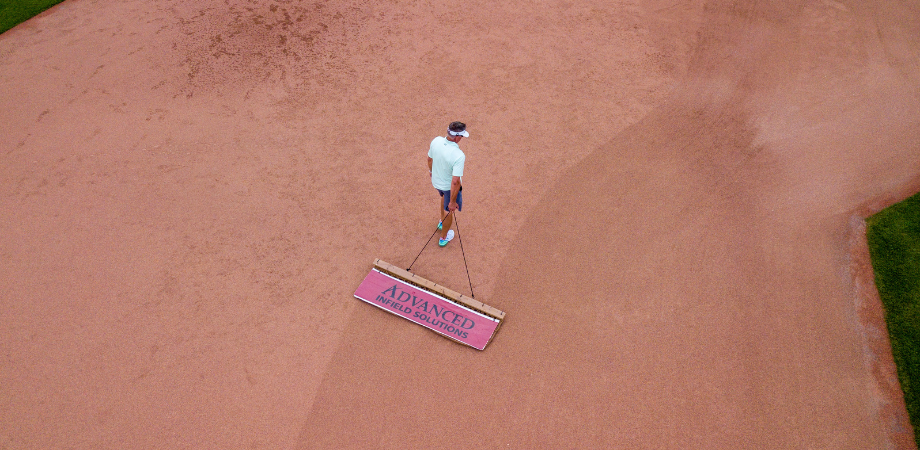
Once the final round of snow melts away, sports turf managers should start thinking about how to get their baseball and softball fields ready for play. Here are a few tips to keep in mind.
Avoid Rushing Into Play
The playing season may be short, but it’s crucial not to compromise your field’s grade or long-term condition for the sake of a single practice or game. Playing on a wet infield is not a good idea. You can speed things up by scarifying or nail-dragging the skin to start the drying process.
Roll the Infield
Once your infield material starts to dry, roll the infield. Winter conditions—specifically the constant freezing and thawing—will cause your infield to heave, and rolling will help recompact the surface. To determine if your field is ready to roll, take a walk across the surface. If the field settles but doesn’t stick to the bottom of your shoe, it can be rolled. If it does stick to your shoe, it’s not dry enough yet to roll. After rolling, use a drag mat to smooth out the infield. A two-ton double drum roller is recommended. If you do not own one of these, they are readily available to rent.
You should also add infield mix to any lips or low spots to even them out, which keeps players safe and water moving off the surface.
Add Infield Conditioner
If the field hasn’t been conditioned recently, take this opportunity to apply infield conditioner after rolling. Proper conditioning improves moisture management and playability. Add a quarter-inch to half-inch of conditioner. If you’re looking for products, our Advanced Infield Solutions line has three high-quality calcined clay conditioners.
In-Flow is another standout product that helps control moisture on your field—especially when it’s early in the playing season. In-Flow is a granular conditioner and surfactant that influences water’s ability to flow into and throughout the profile of infield skins. In-Flow is not only a soil penetrating or infiltration product; it also contains a hydrating chemistry that helps maintain moisture deep in the profile. This means that In-Flow can assist in balancing water content, which keeps your fields more playable and reduces hard surfaces during dry periods.
Consider an Engineered Infield Mix
Instead of being harvested from the ground locally and mixed, the components of engineered infield soil are blended using a computer. The computer controls the sand, silt, and clay percentages. These mixes are more stable, reducing the dust factor and controlling silt. Silt-to-clay ratios should be looked at when adding an infield mix. 0.5-1.5 is an acceptable ratio for most infield surfaces.
For in-depth advice and product recommendations tailored to your field’s needs, reach out to your ATS rep. If you’re new to ATS or need a rep, you can get in touch with one here.