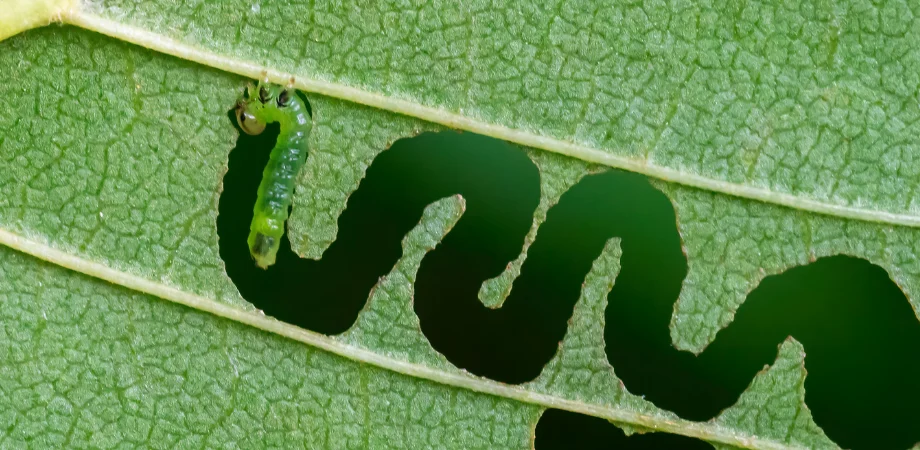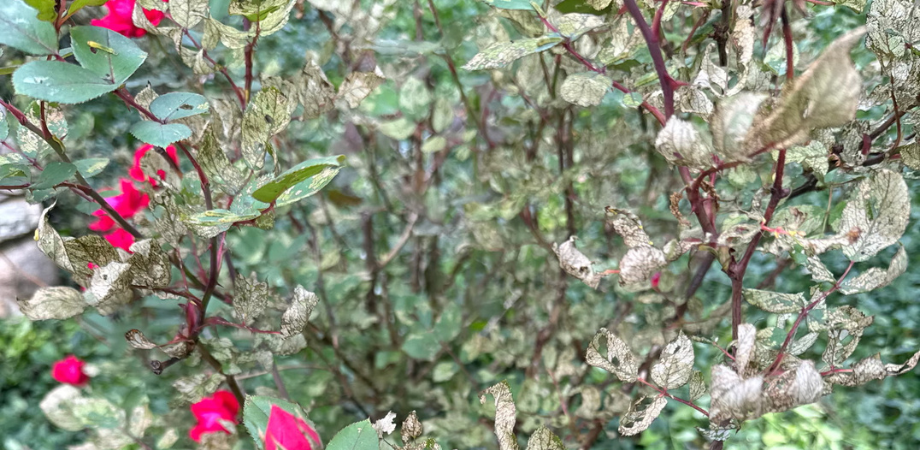
There are plenty of creatures that like to feed on leaves, and today, we’re going to talk about rose slugs.
There are three different kinds of rose slugs here in Indiana: the common rose slug, the bristly rose slug, and the curled rose slug. The curled rose slug earned its name from the fact that it curls into a ball when it’s disturbed, and the bristly rose slug is named after the little hairs that pepper its body.
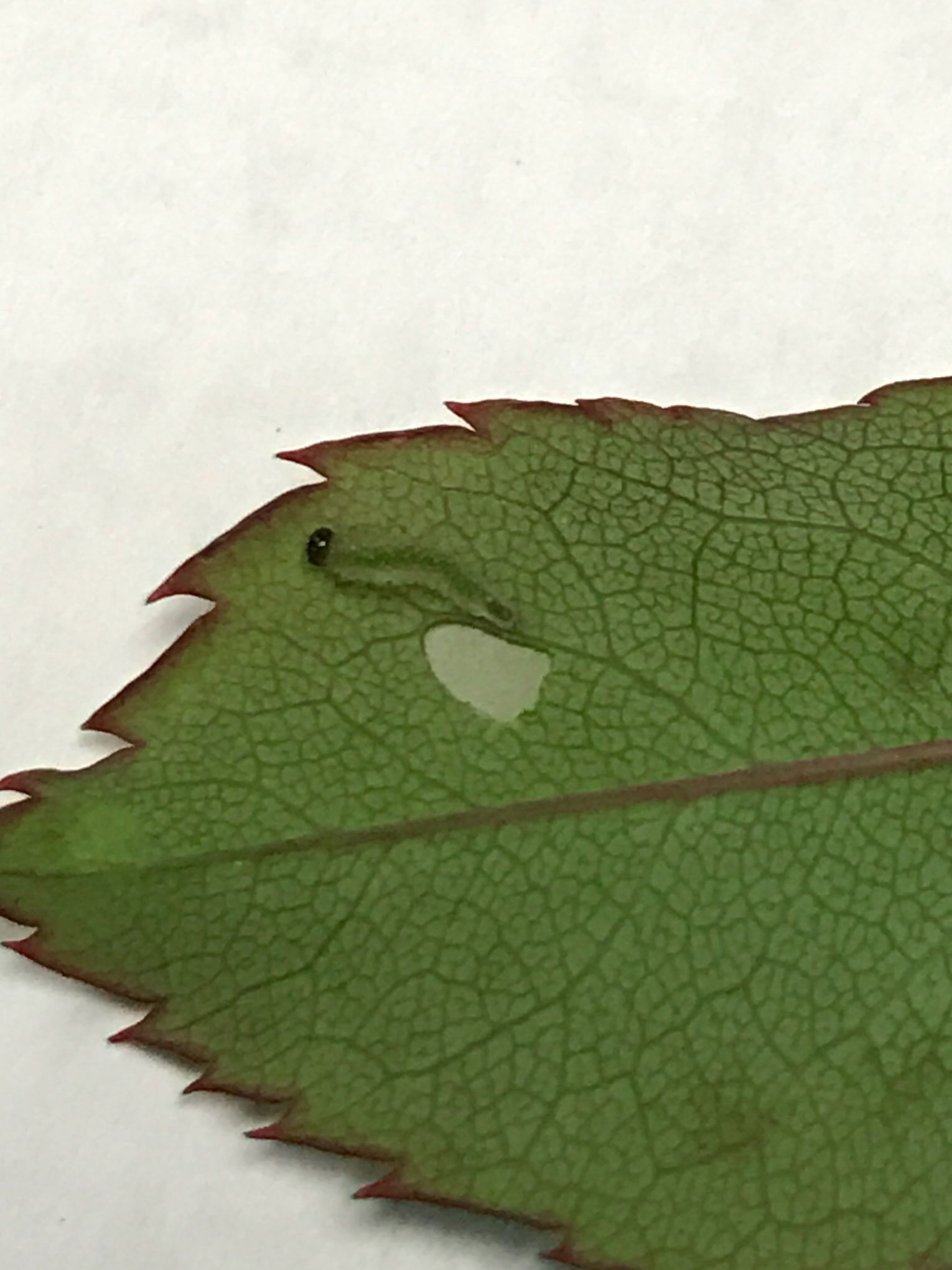
These slugs are not caterpillars. They’re actually the larvae of a sawfly, so they’re more closely related to bees and wasps than they are to butterflies and moths. They do look and behave like slugs, though, with their green and yellow appearance and diet of leaf material.
When they’re young, they don’t consume the whole leaf; they consume the bottom, and they leave the upper epidermis, which almost looks like parchment paper once they’re through with it. As the larvae get bigger, they’ll start consuming the whole leaf or chew small holes in it, and as they continue growing, they’ll take larger and larger strips out of the leaf.
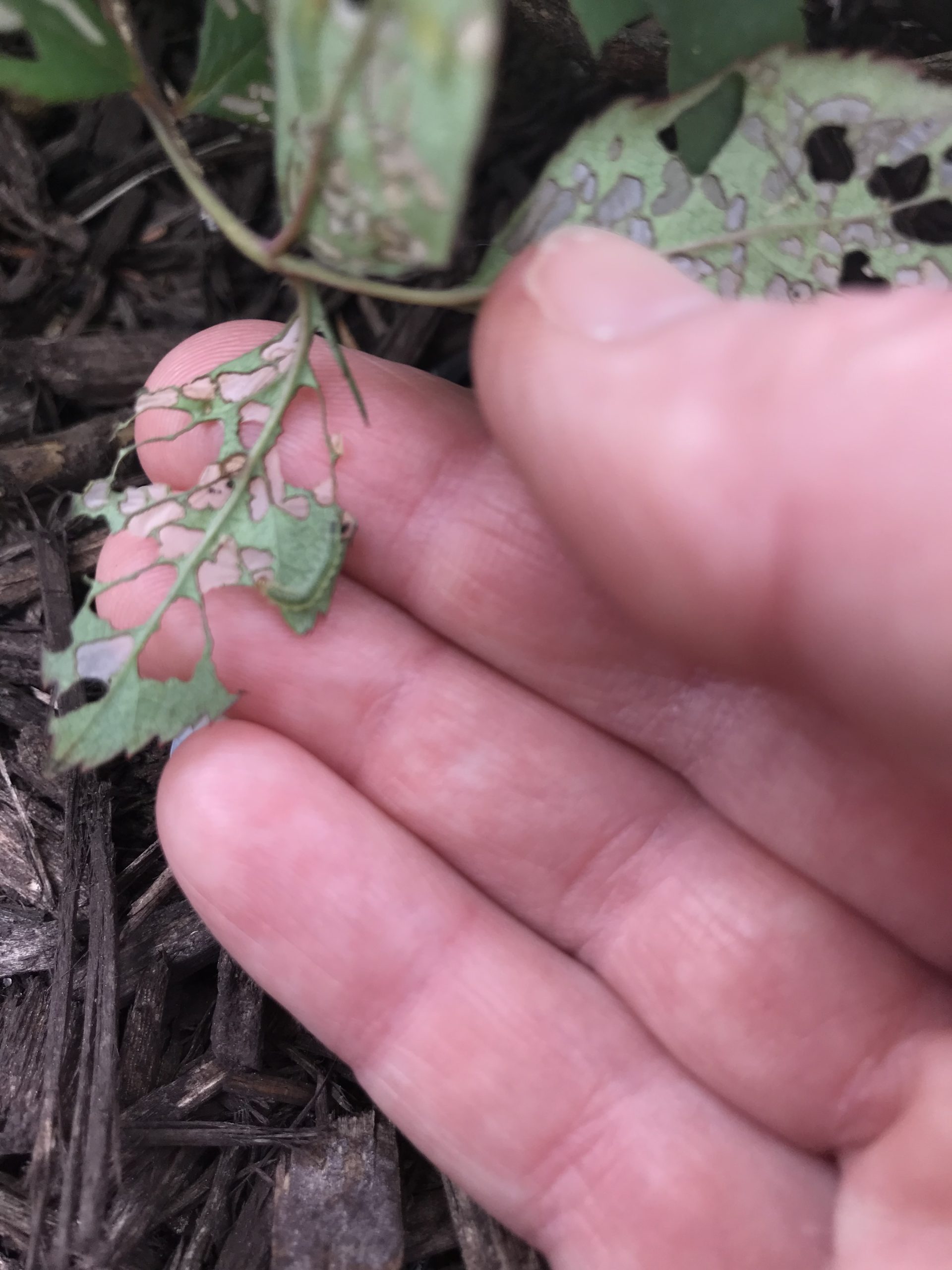
The common rose slug has one generation per year, the curled has two, and the bristly can have multiple, often averaging out at about five or six before the first frost of the year rolls in.
In terms of products we carry, if they contain bifenthrin, they will control rose slugs. With neonicotinoid products like imidacloprid and Safari, though, you can’t treat blooming plants. Since most rose species are in bloom during the entire growing season, those active ingredients (imidacloprid and dinotefuran) are not options.
Conserve is what I would call a ‘softer’ option that can help conserve beneficial insects. While rose slug isn’t specifically listed on the label, sawfly larvae (European pine/redheaded pine) are, and since they’re so closely related, I wouldn’t anticipate any control issues. Another soft option is EcoVia EC, a broad-spectrum botanical that also protects pollinators without sacrificing knockdown and repellency of target insects. This product can be used alone (offers a short-term residual) or with pyrethroid insecticides to help fight resistance.
If you’re going to treat with bifenthrin or any other broad-spectrum products, such as Scion, it’s a good idea to spray early in the morning or later in the evening, when bees are not as active.
The one I see most of the time is the common rose slug, also called the European rose slug, and we typically only see it in the spring. Typically, once it’s finished feeding in the spring, if you get new growth to come out, you won’t notice the damage as much. Unless there has been a very heavy population of rose slugs, long-term plant damage is unlikely, since the plant will continue to produce new leaves to fulfill its photosynthesis needs.
While rose slug damage won’t kill plants, it will cause those plants to appear unsightly. That makes control a priority in high-visibility areas and on high-end landscapes. The other risk is that, after rose slug damage occurs in the spring, Japanese beetles can feed on the leaves later in the summer.
Then, the defoliation piles on, which can take a toll on the plants. For more information on rose slugs and how to control them, watch our video and reach out to your ATS rep. If you’re new to ATS, you can find a rep here and get connected.