
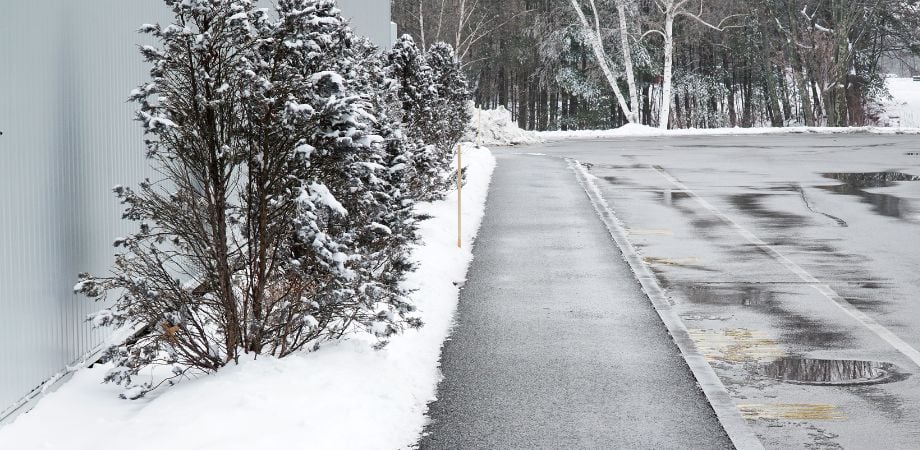
Winter injury is a commonly overlooked issue when it comes to landscape maintenance, but it can be an all too common killer throughout the season.
Causes include wind, snow, extreme temperatures, sun exposure, and low soil temperatures. These are the issues that Mother Nature brings to the table, but what about the plant itself? Plant location, genetics, and establishment are also key factors to winter survival.
The main types of winter injury to look for are: damage to branches, stems, and buds; frozen roots; sun and wind scald on leaves, needles, and bark; bark splitting; and leaf roll or drop.

Bark splitting due to sun scald on red maple
Branch breakage will be clearly visible, but death due to cold temperatures may require a closer look. Scratch the bark with your fingernail or a knife to check for green tissue on young branches and buds. Wait until trees and shrubs leaf out before pruning away the dead.
Frozen roots are much more difficult to diagnose; a thinning canopy throughout the growing season and early fall leaf color are good clues that there is root damage. Proper mulching around trees and landscape beds will reduce root death due to freezing soils. Usually, two inches of total mulch is sufficient.
Sun and wind scald affect evergreens, resulting in needle discoloration or leaf rolling. This can be very apparent on white pines, spruces, and rhododendrons. Leaf roll occurs to help protect the leaf from being further desiccated. On evergreens, an application of an anti-desiccant provides good protection for plantings in exposed areas.
Bark splitting is common on new transplants and/or young trees affected by sun and wind scald. Bark splitting usually occurs on the west or southwest-facing portion of the trunk. When temperatures are at or near freezing and the sun is shining, exposed plant material will warm significantly, only to freeze quickly when the sun sets. The change from a warm surface to freezing causes a rapid expansion, then shrinking, of plant cells and usually results in cell death on a large scale. Cankers or cracks on bark and scorch symptoms on leaves develop soon after.
To help prevent bark cracking, place light colored tree wraps on new plantings and young trees in the fall, and remember to remove them in the spring. Some of these symptoms can be apparent immediately during the spring, but others may take all season or even until the next year to completely show up.
Good fertility and proper pruning are the two key components to preparing landscape plants for winter. A properly timed fertilizer application, after the first hard frost in the fall or in the spring before new growth begins, provides the best plant health benefits. A product like Foliar-Pak Bio 12-6-6 is a great fall fertilizer. There are plenty of preventative solutions that will help prepare your customers’ landscapes for winter, and your ATS rep can help tailor recommendations for your operation.
 Juniper hedge row covered in plowed snow
As winter rolls in, I encourage you to step outside and look up and around at your customers’ landscapes. Are there broken branches in tree canopies? Is there a very large, heavy pile of snow where a hedgerow should be? Do you notice any bark cracking on the trunks of young deciduous trees?
The answers to these questions can help you during cleanup this spring, and if unexpected plant death occurs later in the season.


