Sports fields are subjected to repetitive traffic patterns, especially in the center and at the edges of the playing area. This wear leads to less-than-desirable turf conditions. There is a constant need for seeding, sprigging, and/or sodding to repair these overused areas.
This spring, it’s important to prevent weeds from emerging in these barren locations with a pre-emergent herbicide without harming the new plantings.
Before we cover chemistries, here are a few quick reminders:
The label is the law. Manufacturers spend millions of dollars and thousands of hours bringing these chemistries to market. Follow and trust these labels.
Different turfgrass varieties often have different tolerances to herbicides. While manufacturers test many different plants in their trials, they are not able to test relatively new market varieties. If you have a newer variety that hasn’t been tested, consider running a small test plot of your own. These often provide valuable insights, and do so without risking much turf.
The reseed intervals on a label are a strong suggestion. What I mean by this is that, in general, chemicals are broken down by microbial degradation or leaching through the soil profile. If the weather is colder, the microbes in the soil are not as active, and therefore, the chemistry can stay in the profile longer. This can either be good or bad, depending on your cultural plans. If the area is experiencing continuous rainfall, certain chemistries may not last as long in the profile, which means reapplication may be warranted.
I’ve built a chart that describes the differences between various pre-emergent chemistries. I’ve included my own opinions on the products, too.
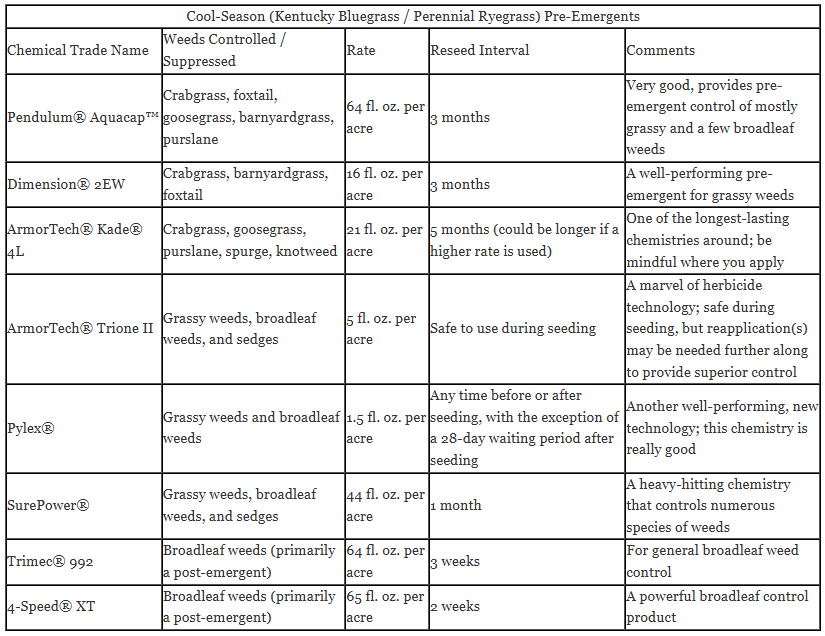
While this is meant to be a helpful guide, please consult your ATS sales representative to build out a pre-emergent herbicide plan that’s tailored to your field(s).